Bavarian Leberkäse – Traditional German Meat Loaf

2026-08-16 11:07

A Bavarian classic with a beautifully browned crust and a smooth, juicy interior. Made from finely processed beef, pork and back fat with traditional aromatic seasoning, Leberkäse is baked in a loaf tin and best enjoyed warm with mustard, pretzels or a fresh bread roll.

Bavarian Leberkäse
Bavarian Leberkäse

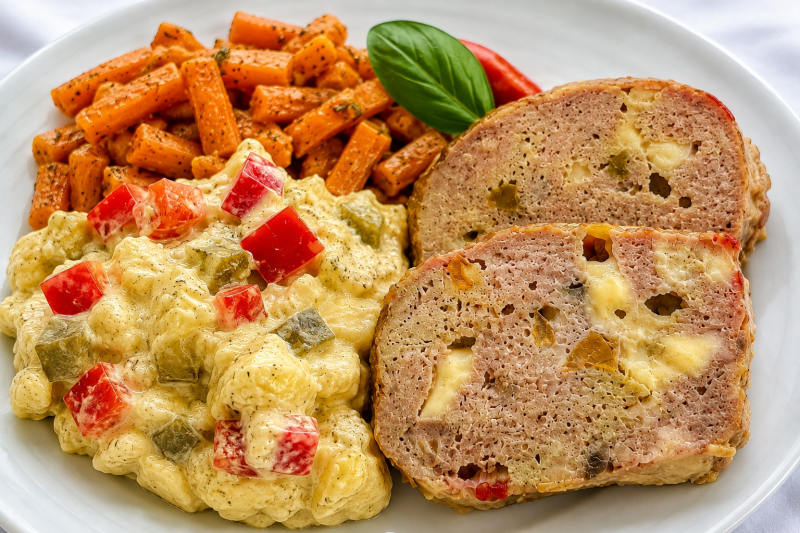
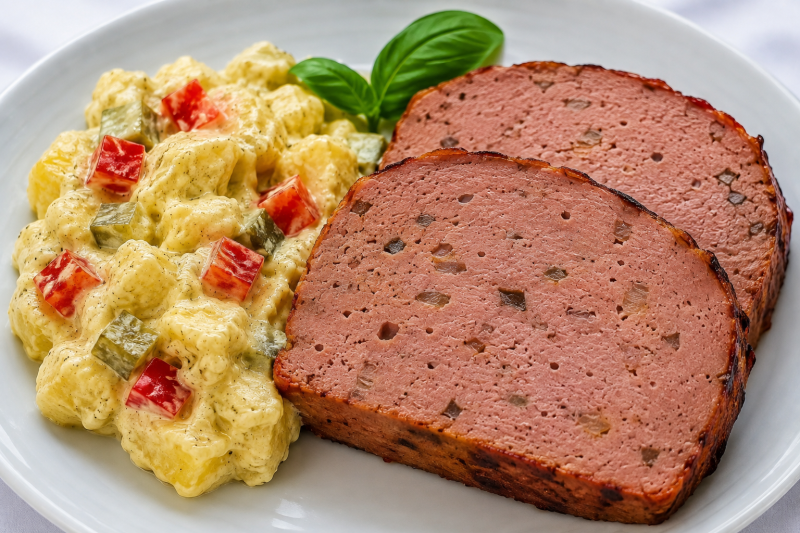
Despite what its name might suggest, traditional Bavarian Leberkäse contains neither liver nor cheese. Instead, it is a finely processed meat speciality with a smooth, succulent interior and the deeply browned crust that develops as the loaf bakes.

Leberkäse has long been a favourite throughout Bavaria and neighbouring Austria, where it can be found in butcher shops, bakeries, restaurants and snack counters. Few things are more typically Bavarian than a thick, warm slice of Leberkäse tucked into a fresh bread roll with a generous spoonful of mustard.

The mixture of lean beef, pork shoulder and pork back fat gives this version plenty of flavour and richness while retaining the characteristic fine texture. Its seasoning is subtle but aromatic: white pepper is complemented by onion, cardamom, mace, nutmeg, ginger and just a touch of paprika.

Unlike Frankfurters, Lyoner and other fine sausages, Leberkäse isn't stuffed into a casing. The finely processed mixture is placed directly into a loaf tin and baked, allowing the exposed surface to develop its characteristic dark golden-brown crust while the centre remains moist and tender.

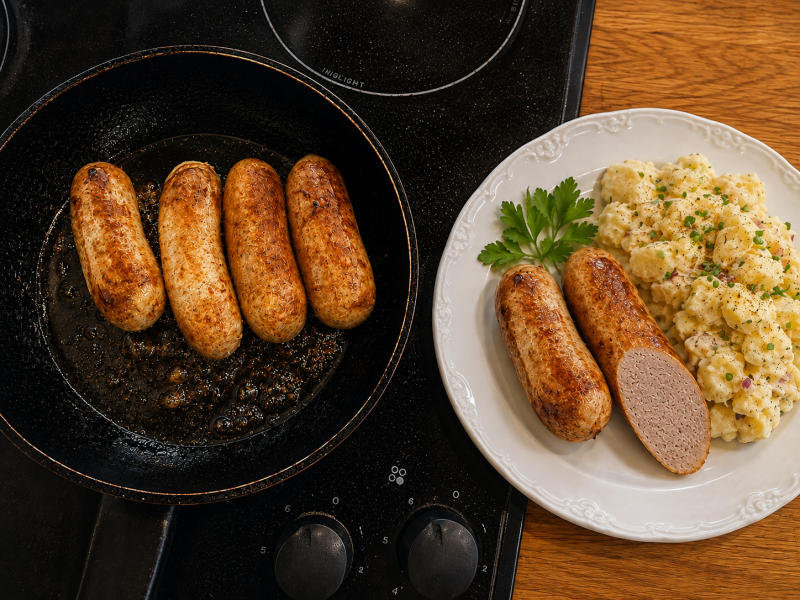
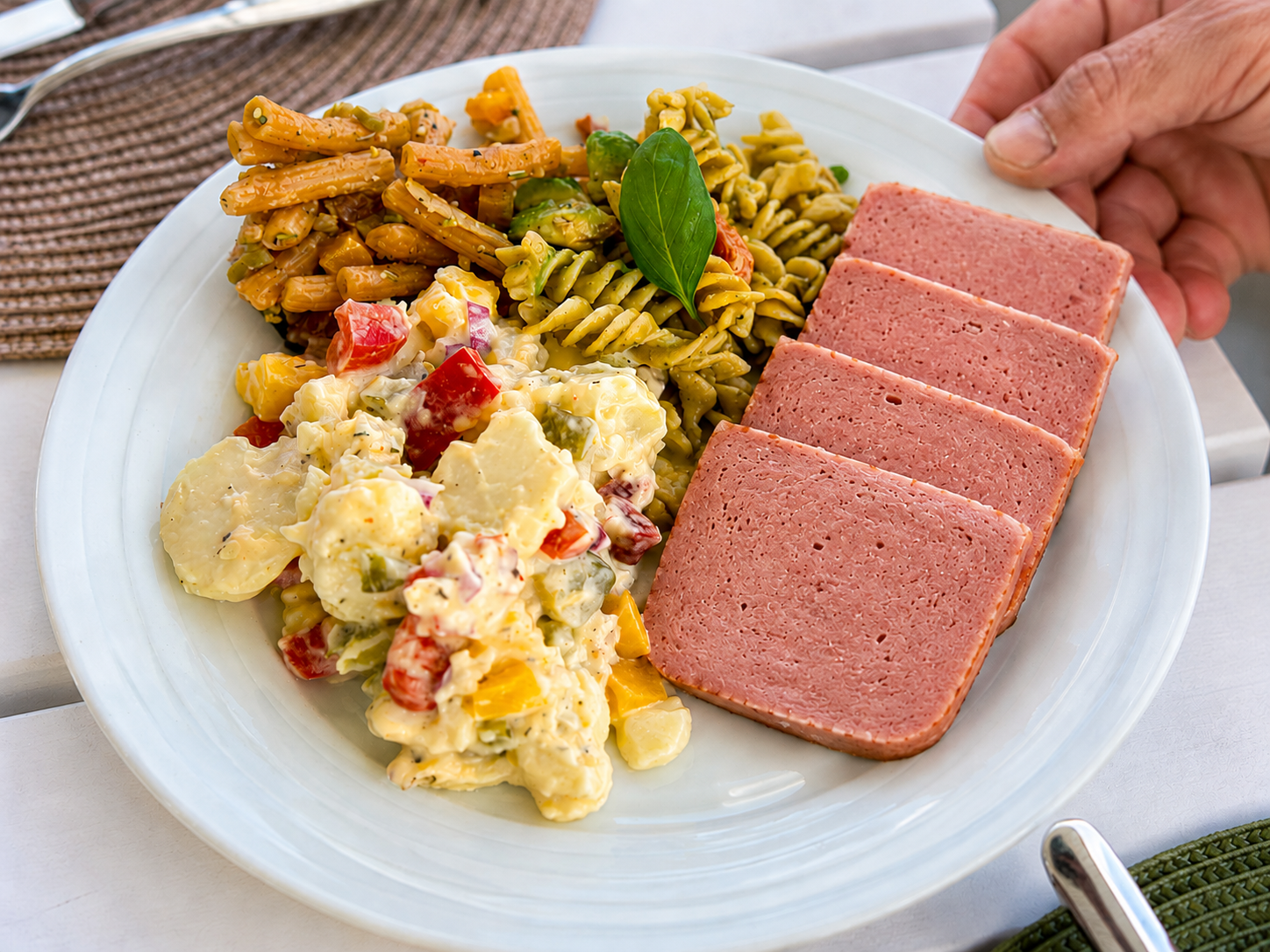
Fresh from the oven, it can be cut into thick slices and served with sweet Bavarian mustard, pretzels, bread or potato salad. Leftovers are equally delicious sliced and browned in a frying pan, often accompanied by fried eggs and potatoes.

Simple, hearty and unmistakably Bavarian, Leberkäse is a wonderful example of how the same fine-sausage techniques used for emulsified sausages can produce something completely different when the mixture goes into a baking tin instead of a casing.
Recipe

A traditional Bavarian Leberkäse made from lean beef, pork shoulder and pork back fat, finely processed with crushed ice for a smooth, juicy texture. White pepper, onion, cardamom, mace, nutmeg and ginger provide its characteristic mild seasoning, while curing salt helps produce the familiar pink interior. Baked rather than stuffed into casings, it develops a rich golden-brown crust while remaining tender and succulent inside.

Recipe Overview

Difficulty
Intermediate
Yield
1000 g
Category
Charcuterie
Region
German

Equipment Needed

• meat grinder • food processor / household cutter / KitchenAid cutter attachment • kitchen scales • thermometer • chilled stainless steel bowls • ice bath setup • bread form

Ingredients

Meat and Fat

  • 500 g Pork shoulder
  • 150 g Lean beef
  • 150 g Pork back fat

Seasoning

  • 20 g Nitirit Salt (Natriumnitirt content 0.4 - 0.5) — If you use Cure 1 or any other product check carefully the amount. Some product may have to be added in very small amounts to salt.
  • 5 g Onion powder
  • 2 g White pepper
  • 0.5 g Cardamom
  • 0.25 g Ginger powder
  • 0.5 g Paprika
  • 0.5 g Mace
  • 0.5 g Nutmeg

Other

  • 3 g Phosphate-based cutter aid
  • 150 g Crushed ice

Method

Preparation

  1. Thoroughly chill the meat, fat and grinder components before beginning.
  2. Trim the meat as needed. Cut the meat and fat into suitable grinding cubes. Keep the meat and the pork fat separated.
  3. Combine and mill all spices except the salt and the cutter aid. Distribute the milled spice evenly over the meat and mix well.
  4. Place the meat and fat into the freezer until very firm but not frozen solid. (Keep meat and fat separated)

Processing

  1. Grind the meat through the smallest plate you have (2.5 or 3 mm) and return to the fridge/freezer.
  2. Grind the fat through the smallest plate you have (2.5 or 3 mm) and return to the fridge/freezer.
  3. Add the salt to the ground meat and mix until sticky and cohesive.
  4. If you already own a bowl cutter you can skip this step.
    Add the cutter aid into the lean meat while give it another good mix.
  5. If you already own a bowl cutter you can skip this step.
    Divide the meat, fat and ice into equal portions you food processor can handle.
  6. If you own a bowl cutter you add the cutter aid to the meat before the ice and continue with undivided portions.
    Using a food processor you start with adding 1 portion meat and start cutting on medium to high speed. Gradually add one portion ice. Last add 1 portion fat and keep on processing until smooth, glossy, and finely emulsified.
  7. If you already own a bowl cutter you can skip this step.
    Repeat the last step until all portions are evenly processed.
  8. If you already own a bowl cutter you can skip this step.
    Combine all portions and give it a good mix before continuing.

Baking

  1. Transfer the mixture into a greased loaf tin.
  2. Smooth the surface using a wet spatula.
  3. You can cut across the surface with a knife to avoid the surface to burst open during baking.
  4. Preheat the oven to 180°C.
  5. Bake for approximately 15 to 20 minutes to initiate crust formation.
  6. Reduce the oven temperature to 120°C.
  7. Continue baking for approximately 1 hour per kilogram of mixture.
  8. The internal temperature should reach approximately 72°C.

Finishing

  1. Remove from the oven and allow to rest before slicing.

Additional Guidance

Preparation Guidance

The initial higher temperature helps create the characteristic browned crust that is one of the defining features of traditional Leberkäse. The lower finishing temperature allows the emulsion to cook gently and evenly while retaining moisture and texture.

Cooking Notes

If you split the batter into several loaf tins make sure they are the same weight or remember the weight of each batch. Final baking time depends on weight 1 h / kg batter or until the internal temperature reaches 72 deg. C.

Resting and Cooling

After baking just let it rest a bit so you are able to get it out of the tin without burning yourself.

Storage

Refrigerated up to 3 days and frozen about 3 month.

Serving Suggestions

Serve warm in bread rolls or with potato salad as a side. It is also good re-heated, browned both sides in a frying pan and served with a fried egg and roast potato.

Additional Notes

A properly made Leberkäse should have: • Fine texture • Smooth slice • Moist interior • Well-developed crust

Sausage Specifications

Grind Size 3 mm
Cure Type Nitrit salt
Internal Temperature 72°C
Freezer Friendly Yes

You May Also Like


Back to Blog

Stay Updated

Receive new sausage recipes, practical sausage-making tips and occasional updates.

You will receive an email asking you to confirm your subscription. You can unsubscribe at any time.