One of the great advantages of making your own sausages is knowing exactly what goes into them. Fresh ingredients, carefully selected spices and complete control over the process all contribute to producing high-quality sausages.
Just as importantly, making sausages at home also means taking responsibility for handling raw meat safely. Fortunately, good food safety is based on simple habits that quickly become second nature.
Start with Fresh Ingredients
Always buy fresh meat from a trusted supplier and keep it refrigerated until you're ready to begin. Check use-by dates and avoid meat that has an unusual smell, excessive liquid in the packaging or signs of discolouration.
Keep Everything Clean
Wash your hands thoroughly before handling food and whenever you move between different tasks. Clean and sanitise your work surfaces, knives, chopping boards and equipment before and after use.
Good hygiene helps prevent bacteria from spreading and keeps your working area safe.
Avoid Cross Contamination
Keep raw meat away from cooked food and ready-to-eat ingredients. Use separate utensils and chopping boards whenever possible, and always wash equipment that has been in contact with raw meat before using it again.
Keep Meat Cold
Temperature plays a vital role in both food safety and sausage quality. Keep meat and fat refrigerated until needed and return them to the refrigerator if they begin to warm during preparation.
Cold meat is not only safer—it also produces better sausages.
Cook Thoroughly
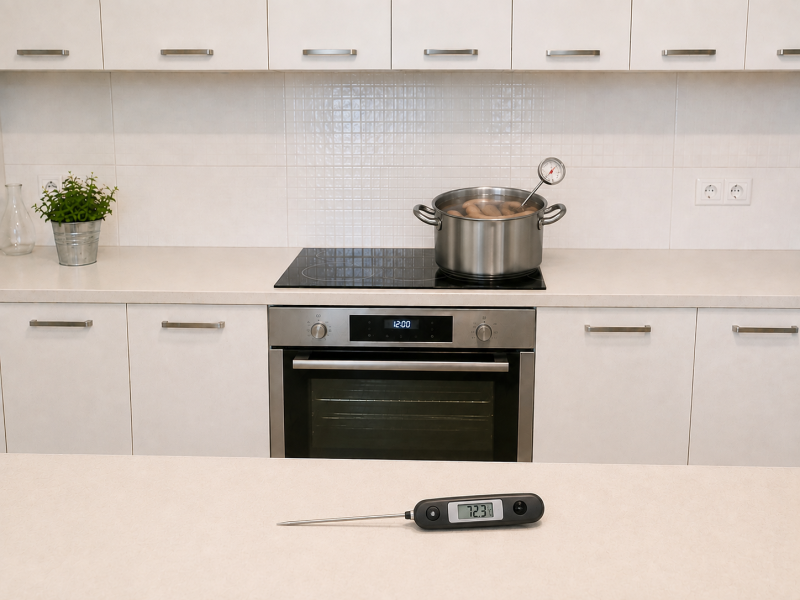
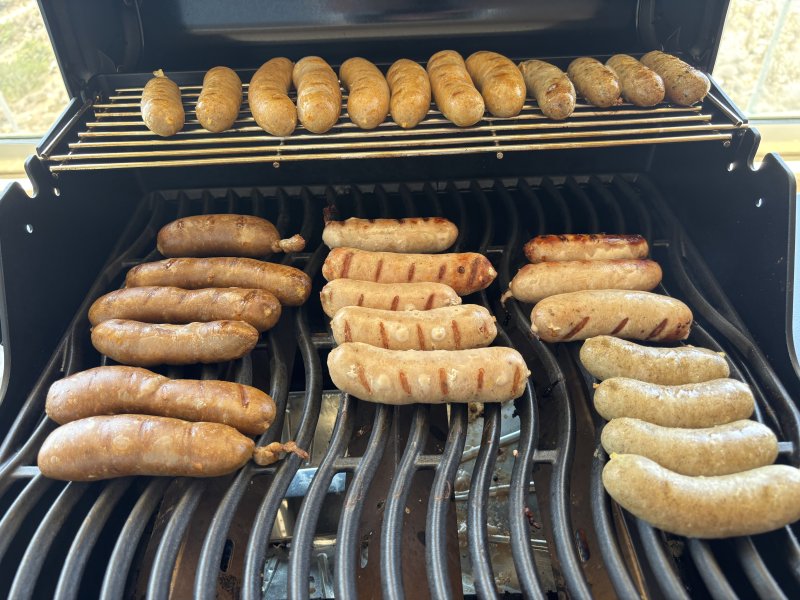
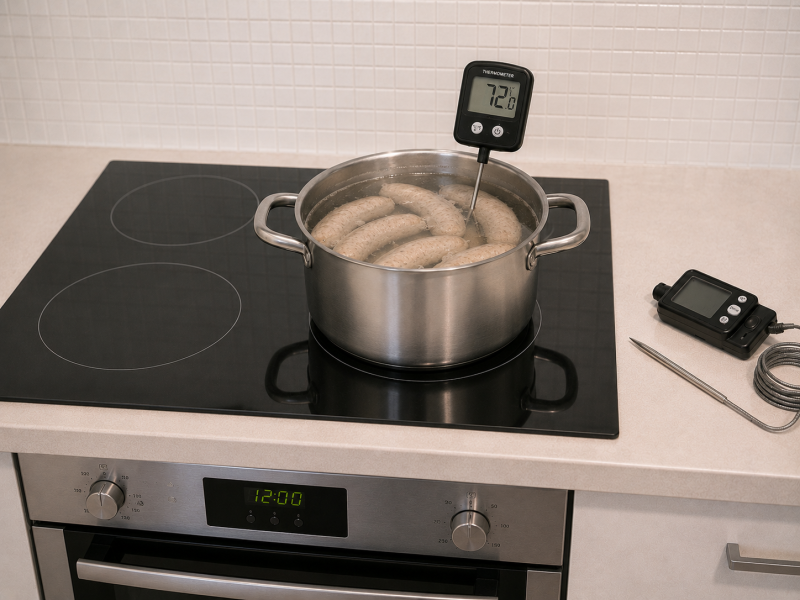
Most fresh sausages should be cooked until they reach a safe internal temperature. Using a digital food thermometer is one of the easiest ways to ensure consistent results without overcooking.
Cool and Store Correctly
After cooking or poaching, cool sausages promptly before refrigerating or freezing them. Store them in airtight containers or vacuum-sealed bags to maintain quality.
If you're unsure how long something has been stored, it's always better to discard it than take unnecessary risks.
Food Safety Becomes a Habit
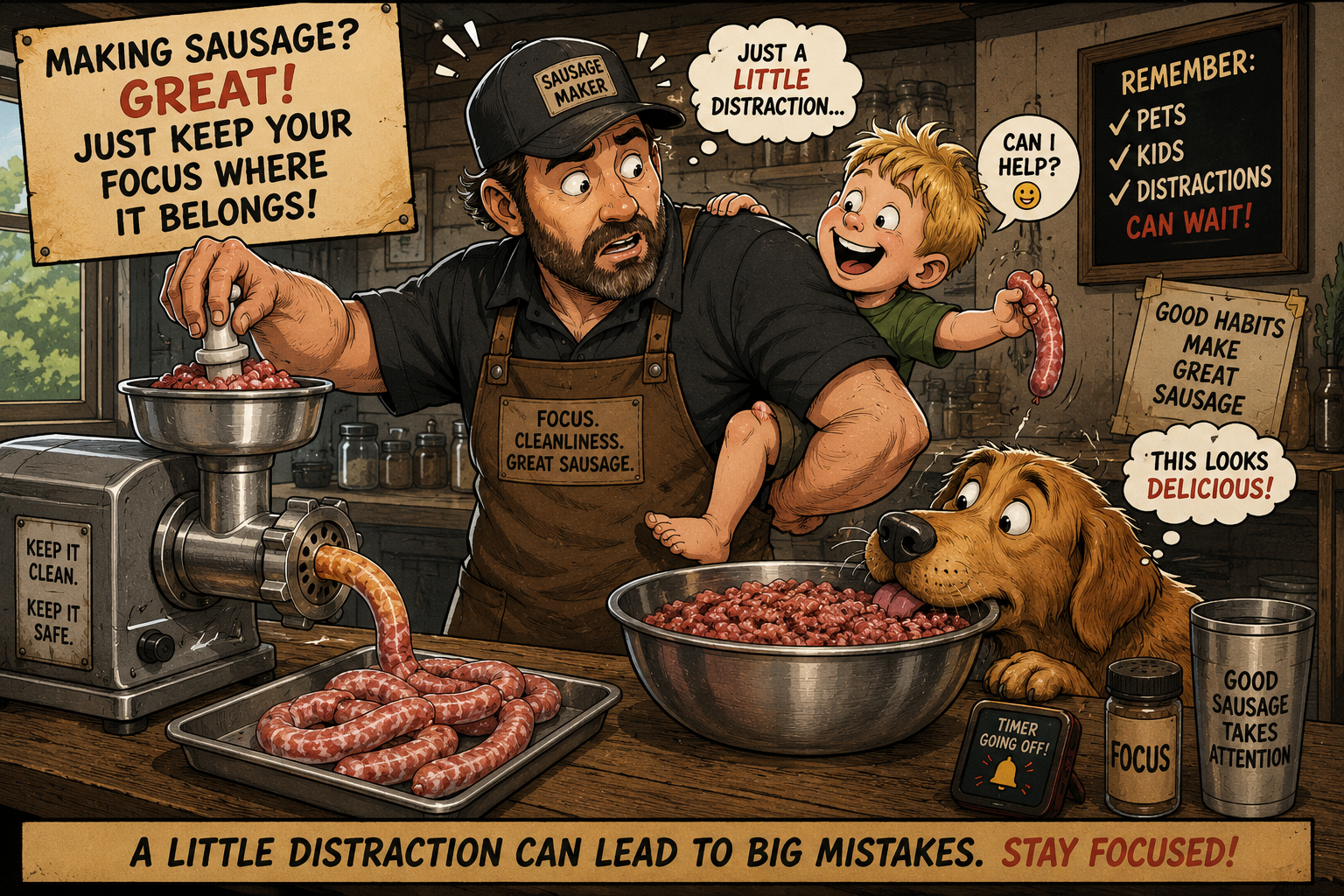
Food safety isn't about making sausage making complicated. It's about developing a few good habits that protect both you and the people you're cooking for.
Once these habits become routine, you'll spend less time worrying about safety and more time enjoying the process of making great homemade sausages.
Reference: Food Safety at a Glance
| Practice | Recommendation | Why It Matters |
|---|---|---|
| Buy Fresh Meat | Purchase from a trusted supplier and check use-by dates. | Fresh ingredients are the foundation of safe, high-quality sausages. |
| Keep Meat Cold | Refrigerate meat and fat until needed. | Reduces bacterial growth and improves sausage texture. |
| Clean Equipment | Wash and sanitise all equipment before and after use. | Helps prevent cross contamination. |
| Separate Raw & Cooked Foods | Use separate utensils and chopping boards where possible. | Prevents harmful bacteria from spreading. |
| Cook Thoroughly | Always check the internal temperature with a food thermometer. | Ensures the sausage is safely cooked. |
| Store Correctly | Refrigerate or freeze promptly after cooling. | Maintains quality and food safety. |
Dieter's Tip
Develop a routine before you begin. I prepare all my equipment, weigh my ingredients, sanitise my work area and keep the meat refrigerated until the very last moment. A little preparation makes the whole sausage-making process smoother, safer and much more enjoyable.