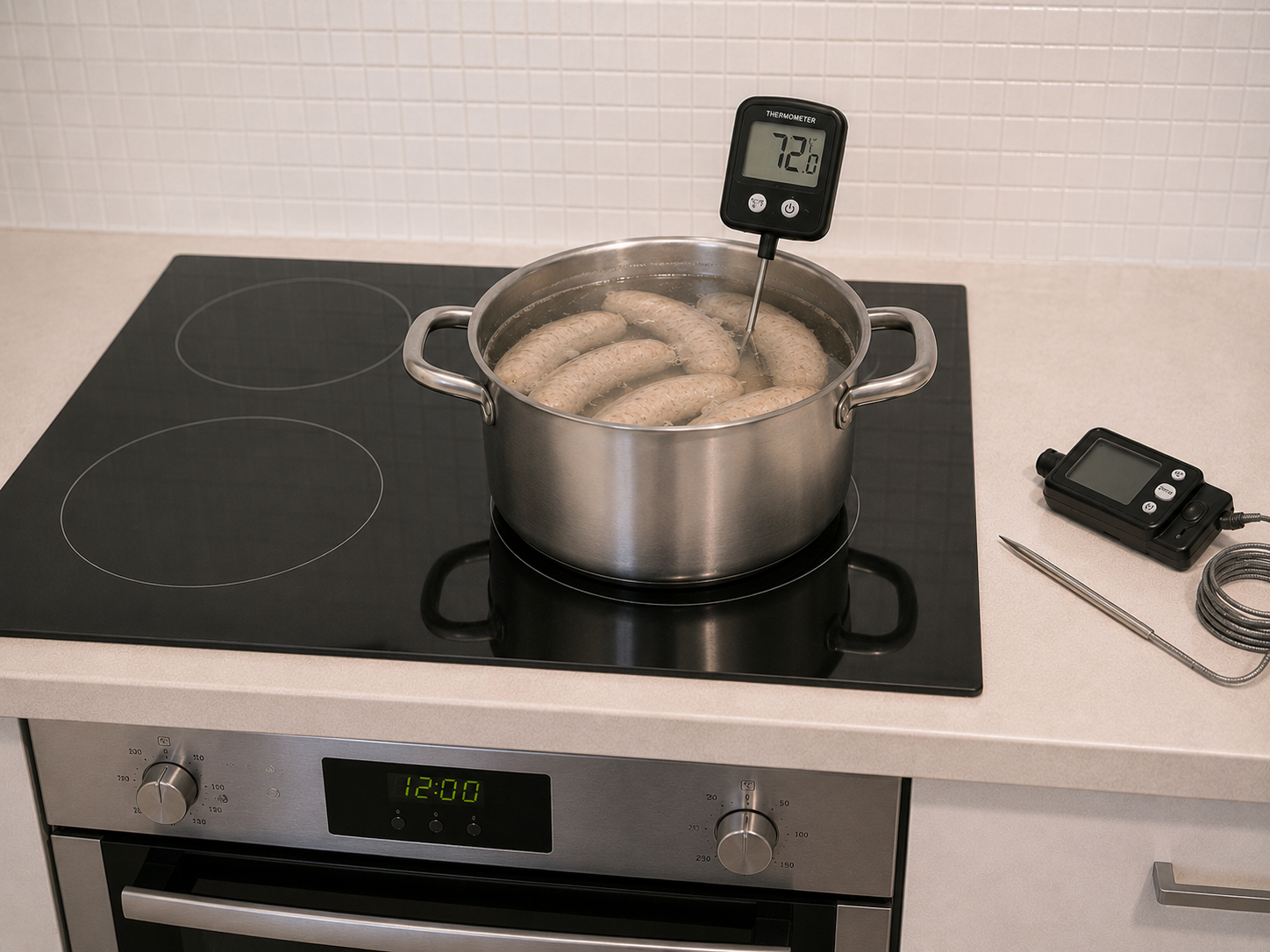
Poaching is one of the most useful cooking techniques a home sausage maker can learn. It provides gentle, controlled heat that cooks sausages evenly while helping them retain moisture and develop a tender, juicy texture.
It is particularly useful for bratwurst, chicken sausages, emulsified sausages and many traditional European sausage styles that are cooked after stuffing.
But there is one important rule to remember from the beginning:
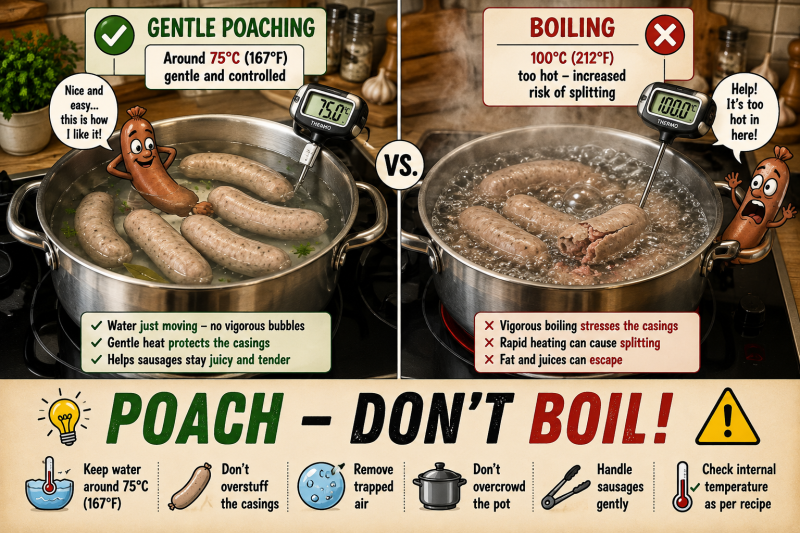
Poaching sausages does not mean boiling them.
Why Poach Sausages?
Cooking a raw sausage directly over high heat can sometimes result in an overcooked exterior while the centre is still coming up to temperature. The casing may also split if the sausage is heated too aggressively.
Poaching surrounds the entire sausage with gentle, evenly distributed heat. This allows the centre to cook gradually without subjecting the casing and outer layers to excessive temperatures.
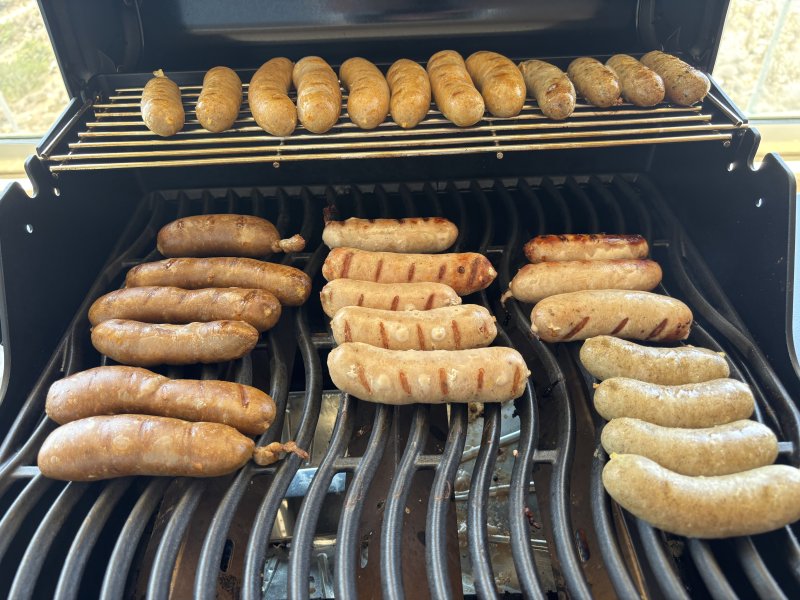
Once poached and cooled, the sausages can be refrigerated and later grilled or pan-fried to develop colour and additional flavour.
Poaching Is Not Boiling
One of the most common mistakes is allowing the water to boil.
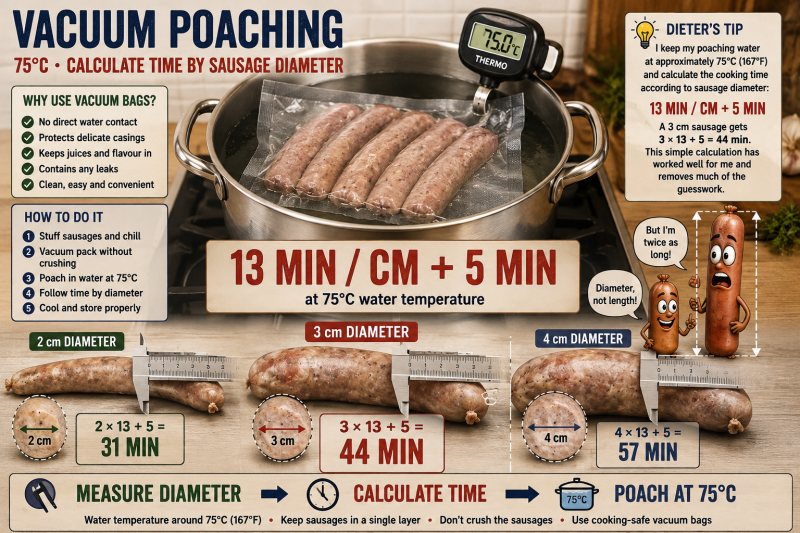
For most of the poached sausages we make in Dieter's Sausage Kitchen, I aim for a water temperature of approximately 72–75°C.
At this temperature there should be no vigorous bubbling. The water is hot enough to cook the sausages gently while reducing the risk of split casings, excessive fat loss and a dry finished texture.
Bring the Water to Temperature First
Heat enough water to allow the sausages to move freely without overcrowding the pot. Bring the water to the required poaching temperature before adding the sausages.
A digital thermometer makes temperature control much easier.
Once the sausages are added, the water temperature will naturally fall. Allow it to return gradually to the required range rather than turning the heat up aggressively.
Maintain a Steady Temperature
During poaching, check the water temperature regularly and adjust the heat as necessary.
A heavy pot helps because it tends to maintain a more stable temperature. On an electric or induction hob, you may find that very small adjustments are all that's required once the correct temperature has been reached.
Avoid allowing the water to reach a rolling boil at any stage.
How Long Should Sausages Be Poached?
The required cooking time depends primarily on the diameter of the sausage. A thin sausage will heat through much faster than a large-diameter sausage.
As a practical guide, many standard sausages in approximately 30–35 mm casings will require around 25–30 minutes when poached gently at 72–75°C.
Larger sausages will naturally require longer.
However, cooking time should always be treated as a guide rather than the final test.
Internal Temperature Matters More Than Time
The most reliable way to determine whether a sausage has been sufficiently cooked is to measure its internal temperature with a digital food thermometer.
Insert the probe into the centre of one of the sausages and follow the safe internal temperature appropriate for the meat and recipe you're preparing.
This is particularly important with poultry sausages and larger-diameter products.
Using temperature rather than relying solely on time gives you much more consistent results and helps prevent unnecessary overcooking.
Don't Crowd the Pot
Give the sausages enough room for the hot water to circulate around them.
Adding a large quantity of cold sausages at once can cause the water temperature to drop considerably and may result in uneven cooking.
If you're preparing a particularly large batch, poaching in two or more batches is often easier than trying to fit everything into one pot.
Cooling After Poaching
Once the sausages have reached the required internal temperature, remove them from the hot water promptly.
Transfer them into cold water to stop the cooking process and bring their temperature down quickly.
Once cooled, remove the sausages from the water and allow the casings to dry before refrigerating them.
This cooling step helps prevent residual heat from continuing to cook the sausages and contributes to a better final texture.
Poached Doesn't Mean Finished
Many poached sausages are delicious straight from the poaching pot, but poaching can also be considered the first cooking stage.
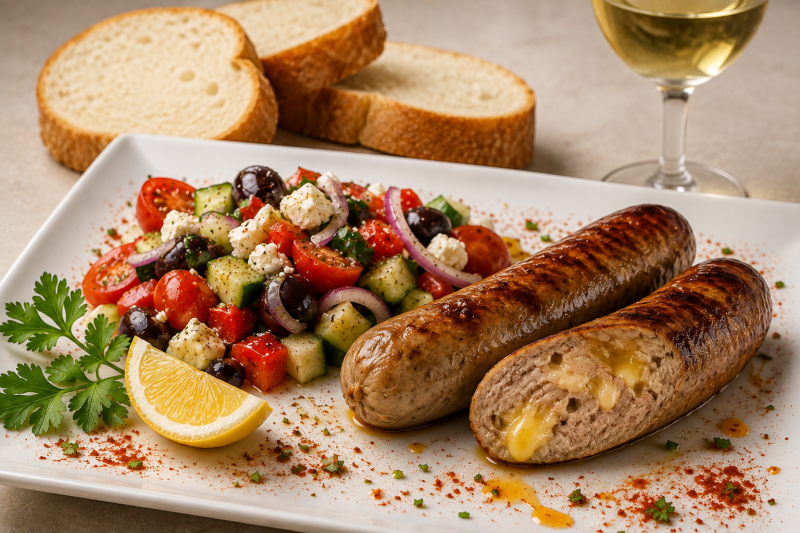
Once cooled and dried, bratwurst and similar sausages can be grilled or pan-fried later. Because the sausage has already been cooked through, you're mainly reheating it and developing an attractive browned exterior.
This is particularly convenient when preparing sausages for a barbecue. You can poach them in advance, refrigerate them and finish them quickly on the grill when your guests are ready to eat.
A Gentle Technique with Reliable Results
Poaching isn't complicated. The key is simply controlling the temperature.
Keep the water below boiling, allow sufficient cooking time, verify the internal temperature and cool the sausages promptly afterwards.
Once you become comfortable controlling the water temperature, poaching becomes one of the easiest and most reliable techniques in home sausage making.
Reference: Poaching Sausages
| Stage | Recommendation | Why It Matters |
|---|---|---|
| Water Temperature | Approximately 72–75°C for many poached sausage recipes. | Provides gentle, controlled cooking without boiling. |
| Standard Sausages | Approximately 25–30 minutes for many 30–35 mm sausages. | Use as a guide only; diameter and recipe affect cooking time. |
| Large Sausages | Allow additional time. | Heat takes longer to reach the centre of a larger sausage. |
| Internal Temperature | Check with a digital food thermometer. | Core temperature is more reliable than cooking time alone. |
| After Poaching | Transfer promptly to cold water. | Stops continued cooking and begins rapid cooling. |
| After Cooling | Remove from the water and allow the casing to dry. | Prepares the sausages for refrigeration, storage or later cooking. |
Dieter's Tip
Don't try to control poaching by watching for bubbles. Use a digital thermometer. Once you know how your hob and pot behave, maintaining 72–75°C becomes surprisingly easy. And remember: time is only a guide—the temperature at the centre of the sausage tells you when it is properly cooked.