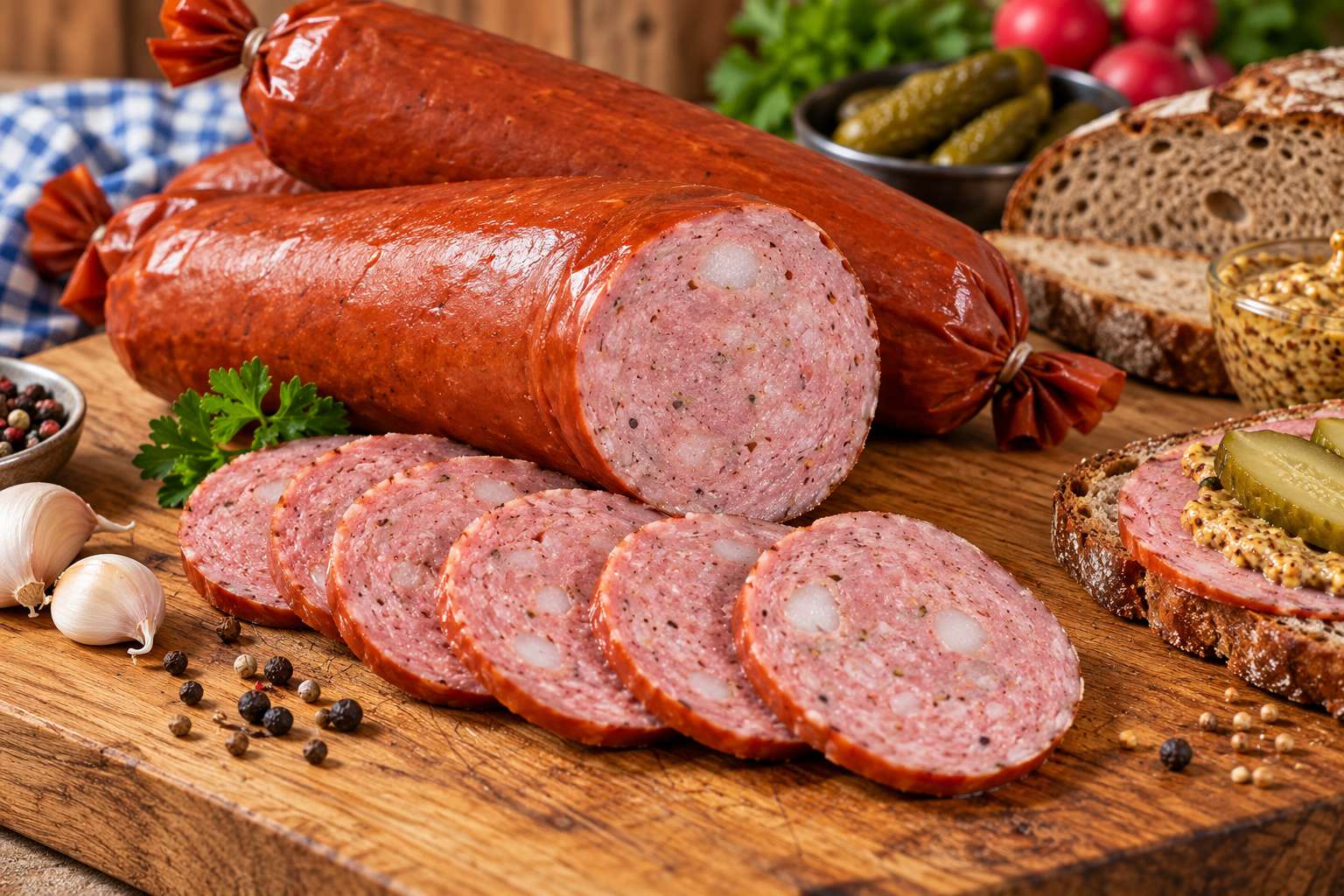
When we think of salami, we usually imagine a sausage that has been fermented, dried and matured over several weeks. But not every salami-style sausage needs to follow that process.
German Kochsalami is a good example of a different approach.
Unlike traditional dry-cured salami, Kochsalami is a cooked sausage. It combines coarsely ground meat, firm pork fat and characteristic salami seasonings, but the finished sausage is cooked rather than preserved through a lengthy fermentation and drying process.
This makes it particularly interesting for home sausage makers who enjoy the flavour and texture of salami but don't have a dedicated curing chamber.
What Makes Kochsalami Different?
The defining characteristic of Kochsalami is its combination of a recognisable salami-style appearance with a cooked sausage texture.
For this version, we use pork shoulder, lean beef and firm pork back fat. The pork provides the main body of the sausage, the beef adds a slightly deeper flavour, and the back fat creates the distinctive light pieces visible throughout the darker meat.
The seasoning is deliberately traditional in character.
Coarsely ground black pepper provides the most noticeable spice note, while white pepper, garlic, coriander, nutmeg, allspice and a little mustard create a rounded, savoury flavour without overpowering the meat.
It is a sausage that should taste well seasoned rather than aggressively spicy.
Coarse Texture and Visible Fat
One of the pleasures of a good Kochsalami is its appearance when sliced.
Rather than creating a completely fine sausage emulsion, we want a more rustic structure with clearly recognisable pieces of meat and fat.
The firm pork back fat is particularly important here. When handled correctly, it retains its shape during preparation and gives the finished sausage its familiar speckled appearance.
This is why keeping the meat and fat properly chilled during grinding and mixing matters.
The goal is a well-bound sausage that slices cleanly while retaining its characteristic coarse structure.
A Practical Salami for the Home Kitchen
One of the biggest advantages of Kochsalami is that we don't need the specialised equipment associated with fermented and dry-cured salami.
There is no lengthy fermentation stage and no need to maintain a drying chamber for several weeks.
Instead, the sausage is stuffed into suitable casings and gently cooked using a controlled process.
Depending on the particular recipe, Kochsalami may also be smoked to develop additional flavour and colour.
For our version, smoking is an optional addition rather than an essential requirement.
As with other cooked sausages, controlling the cooking temperature is important for achieving a good texture without unnecessary fat separation.
What About Curing Salt?
This recipe uses nitrite curing salt to help develop the characteristic cured-meat colour and flavour associated with salami-style sausages.
Because curing salts differ between countries, the recipe provides separate guidance for European Nitritpökelsalz and the American combination of ordinary salt with Cure #1.
These products are not interchangeable gram for gram. Always use the quantities specified for the exact curing-salt concentration and formulation.
Curing salt does not make this Kochsalami shelf-stable. It remains a cooked meat product that must be properly refrigerated.
How to Enjoy Homemade Kochsalami
Once cooked and thoroughly chilled, Kochsalami develops a firm, sliceable texture that makes it particularly suitable for serving cold.
Thin slices are excellent on fresh bread or bread rolls, especially with mustard, pickles or a little butter.
It also makes a very good addition to a traditional German-style cold meat platter, alongside cheese, pickled vegetables and other homemade sausages.
And, of course, one of the nicest things about making your own Kochsalami is being able to adjust the seasoning to your personal taste once you understand the basic recipe.
Whether you prefer a stronger pepper flavour, a little more garlic or a slightly smoky finish, there is plenty of room for experimentation after mastering the original version.
Dieter’s Tip: For your first Kochsalami, concentrate on keeping the meat and especially the back fat cold during grinding and mixing. A good coarse texture with clearly defined pieces of fat is one of the things that makes this sausage attractive when sliced. Don't try to make the mixture as fine as possible — this isn't the same type of sausage as a fine Bratwurst or Leberkäse.