People often ask me how I became interested in making my own sausages. They usually expect a story about growing up in a butcher's family or learning from a master sausage maker.
The truth is much simpler—and, looking back, quite amusing.
Although I grew up enjoying the incredible variety of German sausages, life eventually brought me to Malta. Maltese sausages are very enjoyable in their own right, but after a while my wife and I found ourselves looking for something a little different. She loves Asian cuisine, especially the wonderful blend of herbs and spices found throughout Thailand.
One day she came home from a local Asian food shop carrying a small packet of Thai sausage seasoning.
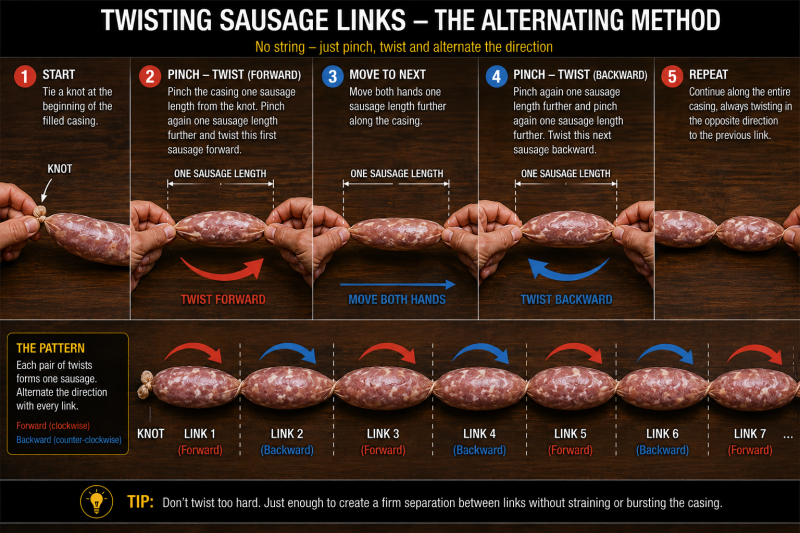
Inside the packet was everything we needed to get started: a carefully blended spice mix, some collagen casings, a piece of string for tying the sausages and surprisingly good instructions.
Our excitement quickly took over.
We visited the local butcher, who kindly minced the meat exactly as we wanted it, stopped at the supermarket for the remaining ingredients and headed home, convinced we were about to become sausage makers.
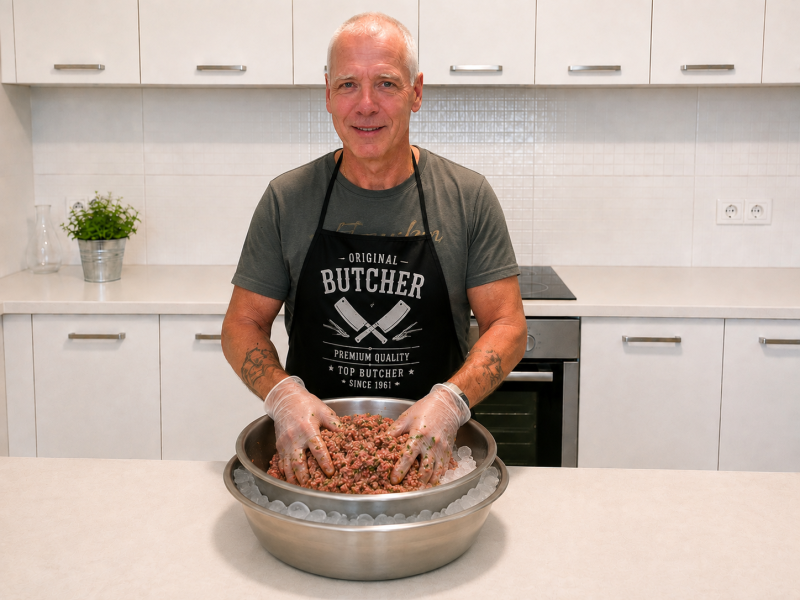
Mixing the meat with the seasoning, herbs and other ingredients was easy enough.
Then reality hit us.
We had completely overlooked one small detail.
We didn't own a sausage stuffer.
In fact, we didn't even own a meat grinder.
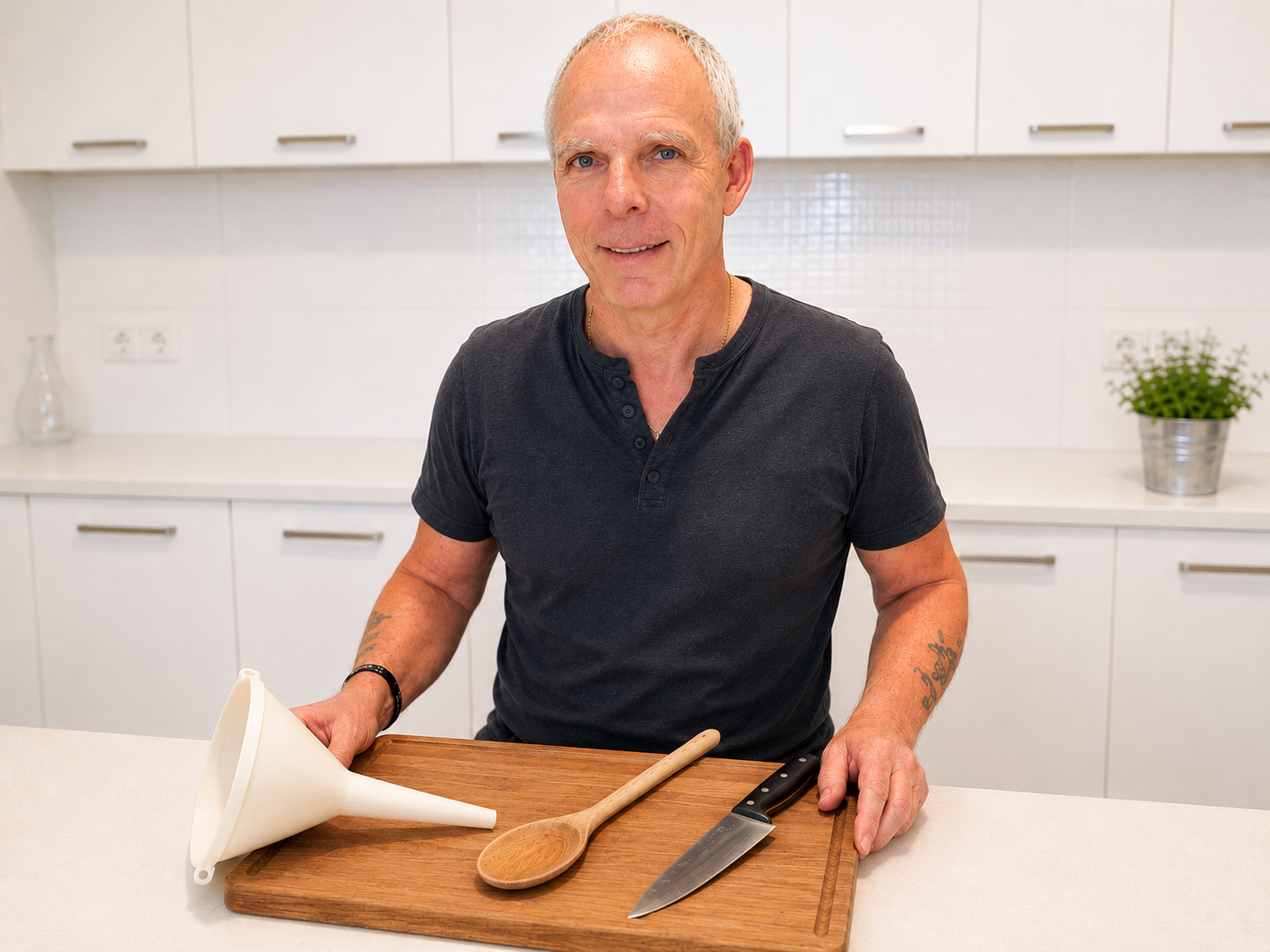
After searching through the kitchen drawers, we found an old plastic funnel that happened to fit the collagen casings almost perfectly. To push the meat through the funnel, we used the handle of a wooden spoon.
It certainly wasn't elegant.
It wasn't fast.
And it definitely wasn't the method you'd find in a professional butcher's shop.
But it worked.
The sausages were far from perfect. Some were thicker than others, a few had trapped air, and they certainly wouldn't have won any beauty contests. Nevertheless, we proudly hung them in the refrigerator overnight, exactly as the instructions recommended.
The following day we cooked them.
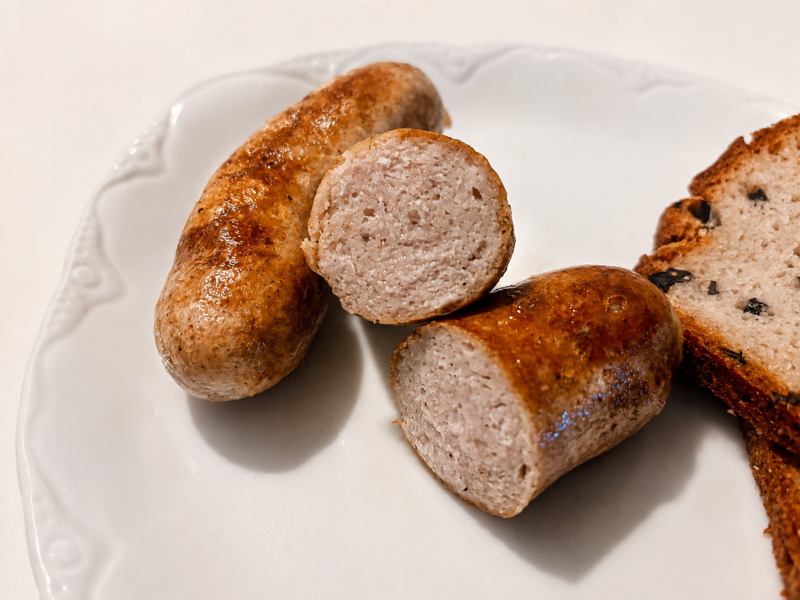
To our surprise, they tasted fantastic.
At that moment something changed.
I realised that making sausages wasn't reserved for professional butchers with expensive equipment. Ordinary people could do it too. All it took was good ingredients, a little patience, a willingness to learn and the confidence to give it a try.
That first batch sparked a passion that has grown year after year. I gradually invested in better equipment, experimented with traditional recipes from different countries, learned new techniques and discovered that every batch—whether successful or not—taught me something valuable.
Today I still believe the most important piece of equipment isn't the meat grinder or the sausage stuffer.
It's the willingness to begin.
Dieter's Sausage Kitchen was created to help others take that first step. If you've been thinking about making your own sausages but keep telling yourself that you don't have the right equipment, I hope my story encourages you to stop waiting.
You don't need a professional butcher's shop to start making great homemade sausages.
Sometimes all you need is a plastic funnel, a wooden spoon and the curiosity to try something new.
What I Learned from My First Batch
| Lesson | Why It Matters |
|---|---|
| Start with what you have | You don't need expensive equipment to begin. |
| Follow the instructions | Good technique matters more than fancy tools. |
| Don't expect perfection | Every batch teaches you something new. |
| Keep learning | Better equipment can come later as your skills grow. |
| Enjoy the journey | Making sausages is as rewarding as eating them. |
Dieter's Tip
Don't wait until you have the perfect equipment. Many successful home sausage makers began with simple tools and gradually upgraded as their experience grew. Your first batch doesn't have to be perfect—it just has to be your first.