Once your meat has been ground, the next step may look simple: add the seasonings and mix everything together.
But mixing does much more than distribute spices throughout the meat. Done correctly, it develops the protein bind that gives a sausage its characteristic firm, juicy and cohesive texture.
This is the point where ground meat really begins to become sausage meat.
What Is Protein Binding?
Meat naturally contains proteins that help bind the meat, fat and added liquid together. During sausage making, salt and mechanical mixing help extract some of these proteins—particularly myosin—from the meat.
As you continue mixing, you'll notice the mixture changing. What began as loose ground meat gradually becomes sticky and starts holding together as a single mass.
That stickiness is exactly what you're looking for.
Why Salt Matters
Salt does much more than season a sausage. It also plays an essential role in extracting the proteins needed to create a strong bind.
This is one reason accurate weighing is so important in sausage making. Too little salt can affect both flavour and binding, while too much will make the finished sausage unpleasantly salty.
Always follow the quantity specified in the recipe and weigh salt with an accurate digital scale.
Add the Seasonings Evenly
Once the meat has been ground, add the salt, spices and other ingredients specified in your recipe. Distribute them over the meat rather than placing everything in one spot.
If the recipe includes water, stock, wine or another liquid, adding it gradually while mixing usually makes it easier to incorporate evenly.
Ingredients such as cheese, fresh herbs, vegetables or other larger additions may be better folded into the mixture towards the end so they retain their texture.
Mix Until the Meat Becomes Sticky
You can mix sausage meat by hand or use a suitable mixer. For the relatively small batches normally made in a home kitchen, mixing by hand works very well.
Work the mixture thoroughly by folding, squeezing and turning it. As the protein bind develops, you'll feel the texture changing beneath your hands.
The mixture should become noticeably sticky and cohesive. If you lift a portion, it should tend to hold together rather than immediately falling apart.
The Palm Test
A simple way to check the bind is to press a small amount of sausage mixture firmly against the palm of your hand. Turn your hand over with your palm facing downward.
If the mixture remains attached rather than immediately falling away, you've usually developed a good protein bind.
It's a simple test, but particularly useful when you're learning to recognise the correct texture.
Keep Everything Cold While Mixing
The rule from our previous articles still applies: keep everything cold.
Mixing generates heat, especially when working the meat vigorously. If the mixture starts becoming noticeably warm or the fat begins to soften, stop and chill it before continuing.
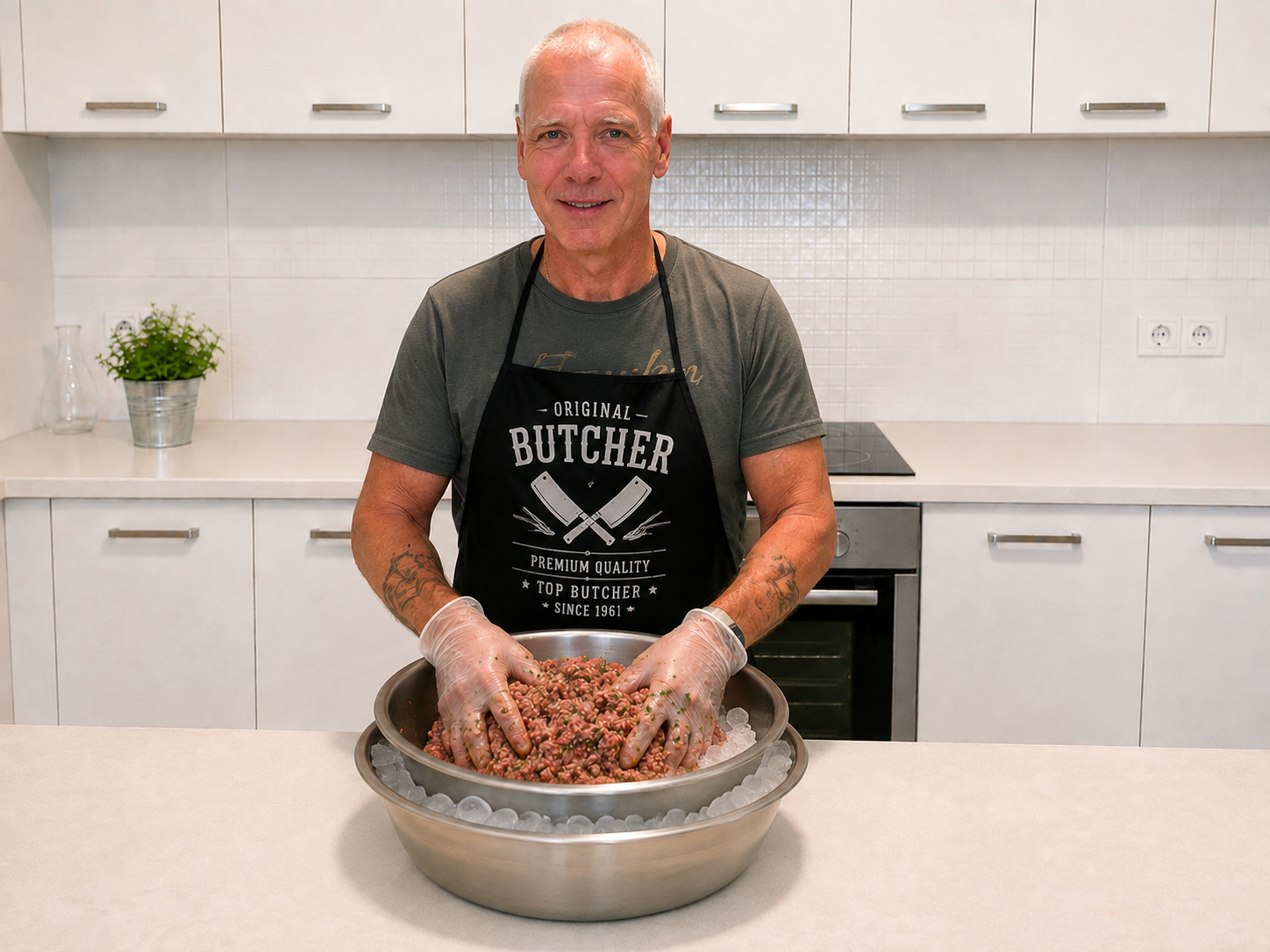
I like to mix the sausage meat in a chilled stainless-steel bowl placed inside a larger bowl containing ice. It's a simple home-kitchen technique that helps maintain a low temperature throughout the process.
Don't Confuse Sticky with Mushy
A properly bound sausage mixture should be sticky and cohesive, but it should still retain the texture appropriate for the sausage you're making.
A coarse bratwurst should still show distinct particles of meat and fat. Developing a good bind doesn't mean turning every sausage mixture into a smooth paste.
Fine or emulsified sausages are different and require additional processing, which we'll cover separately.
Why a Good Bind Matters
A properly developed protein bind helps hold meat, fat and moisture together during cooking. This contributes to a juicy sausage with a firm, pleasant bite.
Without sufficient mixing, the sausage may become loose or crumbly when cut. Fat and liquid may also separate more easily during cooking.
Learning to recognise a properly mixed sausage farce is therefore one of the most useful skills you can develop as a home sausage maker.
Ready for Stuffing
Once the mixture is cold, evenly seasoned and sufficiently sticky, it's ready to go into the casings.
From this point, try to move directly to stuffing while the mixture remains well chilled. If you aren't ready to stuff immediately, cover the sausage mixture and return it to the refrigerator.
Once your meat has been ground, the next step may look simple: add the seasonings and mix everything together.
But mixing does much more than distribute spices throughout the meat. Done correctly, it develops the protein bind that gives a sausage its characteristic firm, juicy and cohesive texture.
This is the point where ground meat really begins to become sausage meat.
What Is Protein Binding?
Meat naturally contains proteins that help bind the meat, fat and added liquid together. During sausage making, salt and mechanical mixing help extract some of these proteins—particularly myosin—from the meat.
As you continue mixing, you'll notice the mixture changing. What began as loose ground meat gradually becomes sticky and starts holding together as a single mass.
That stickiness is exactly what you're looking for.
Why Salt Matters
Salt does much more than season a sausage. It also plays an essential role in extracting the proteins needed to create a strong bind.
This is one reason accurate weighing is so important in sausage making. Too little salt can affect both flavour and binding, while too much will make the finished sausage unpleasantly salty.
Always follow the quantity specified in the recipe and weigh salt with an accurate digital scale.
Add the Seasonings Evenly
Once the meat has been ground, add the salt, spices and other ingredients specified in your recipe. Distribute them over the meat rather than placing everything in one spot.
If the recipe includes water, stock, wine or another liquid, adding it gradually while mixing usually makes it easier to incorporate evenly.
Ingredients such as cheese, fresh herbs, vegetables or other larger additions may be better folded into the mixture towards the end so they retain their texture.
Mix Until the Meat Becomes Sticky
You can mix sausage meat by hand or use a suitable mixer. For the relatively small batches normally made in a home kitchen, mixing by hand works very well.
Work the mixture thoroughly by folding, squeezing and turning it. As the protein bind develops, you'll feel the texture changing beneath your hands.
The mixture should become noticeably sticky and cohesive. If you lift a portion, it should tend to hold together rather than immediately falling apart.
The Palm Test
A simple way to check the bind is to press a small amount of sausage mixture firmly against the palm of your hand. Turn your hand over with your palm facing downward.
If the mixture remains attached rather than immediately falling away, you've usually developed a good protein bind.
It's a simple test, but particularly useful when you're learning to recognise the correct texture.
Keep Everything Cold While Mixing
The rule from our previous articles still applies: keep everything cold.
Mixing generates heat, especially when working the meat vigorously. If the mixture starts becoming noticeably warm or the fat begins to soften, stop and chill it before continuing.
I like to mix the sausage meat in a chilled stainless-steel bowl placed inside a larger bowl containing ice. It's a simple home-kitchen technique that helps maintain a low temperature throughout the process.
Don't Confuse Sticky with Mushy
A properly bound sausage mixture should be sticky and cohesive, but it should still retain the texture appropriate for the sausage you're making.
A coarse bratwurst should still show distinct particles of meat and fat. Developing a good bind doesn't mean turning every sausage mixture into a smooth paste.
Fine or emulsified sausages are different and require additional processing, which we'll cover separately.
Why a Good Bind Matters
A properly developed protein bind helps hold meat, fat and moisture together during cooking. This contributes to a juicy sausage with a firm, pleasant bite.
Without sufficient mixing, the sausage may become loose or crumbly when cut. Fat and liquid may also separate more easily during cooking.
Learning to recognise a properly mixed sausage farce is therefore one of the most useful skills you can develop as a home sausage maker.
Ready for Stuffing
Once the mixture is cold, evenly seasoned and sufficiently sticky, it's ready to go into the casings.
From this point, try to move directly to stuffing while the mixture remains well chilled. If you aren't ready to stuff immediately, cover the sausage mixture and return it to the refrigerator.
Dieter's Tip
Don't mix according to the clock—mix according to the feel of the meat. Depending on the recipe, batch size and temperature, the time required will vary. Learn to recognise the change from loose ground meat to a cold, sticky and cohesive sausage mixture. Once you've felt a proper bind a few times, you'll recognise it immediately.