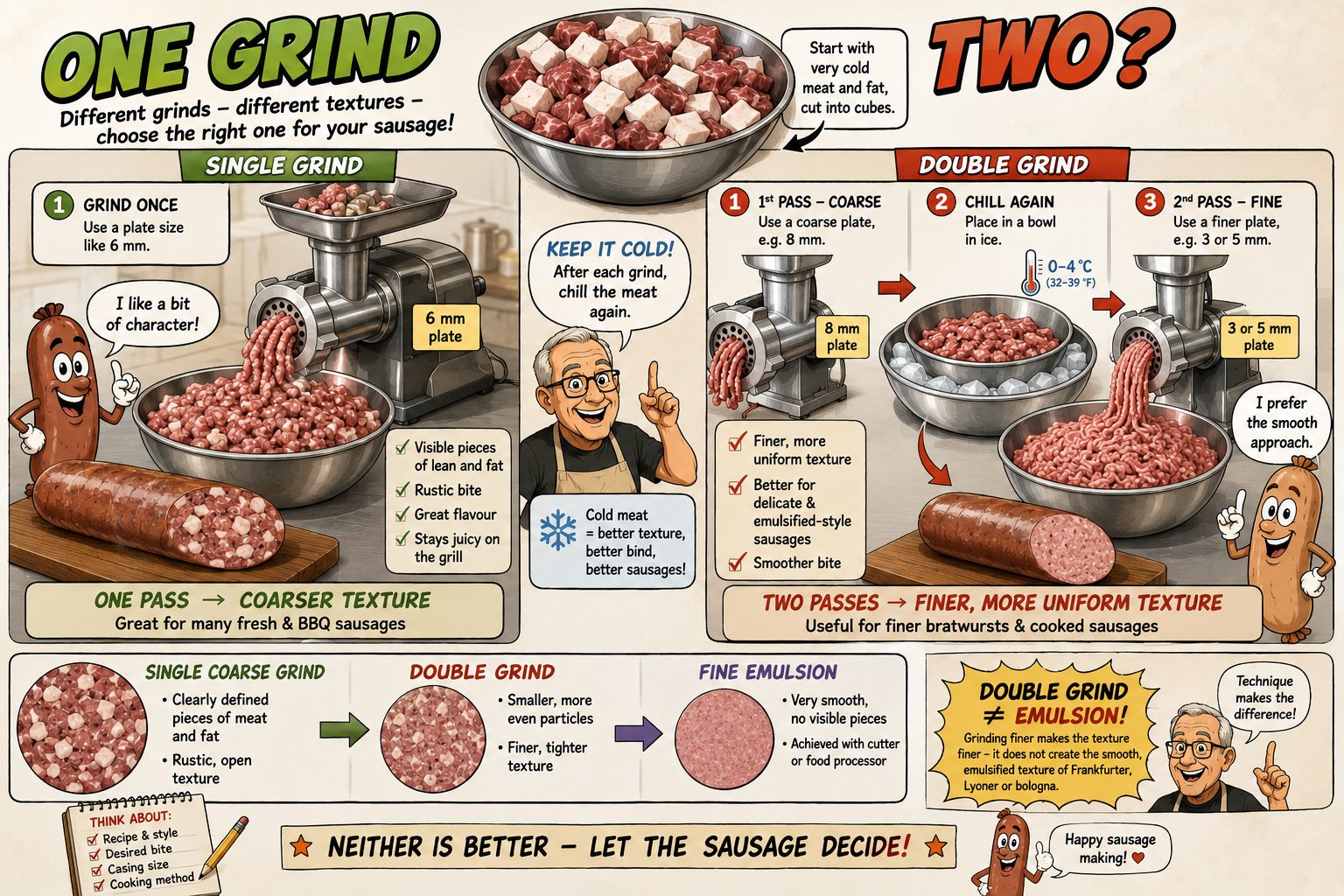
When you first start making sausages, grinding seems straightforward: choose a plate, pass the meat through the grinder and you're finished.
Then you encounter a recipe that tells you to grind the meat twice—or perhaps grind it coarsely first and then pass it through a finer plate.
So which method is better?
Neither. The correct method depends on the texture you're trying to create.
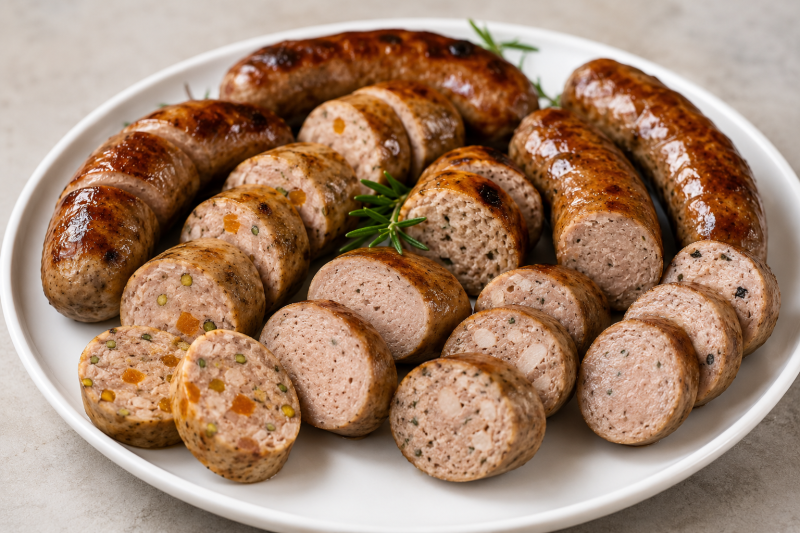
A rustic fresh sausage benefits from clearly defined pieces of meat and fat, while a fine bratwurst requires a much more uniform texture. Understanding what happens during each grind allows you to choose the technique rather than simply following instructions without knowing why.
What Does Grinding Actually Do?
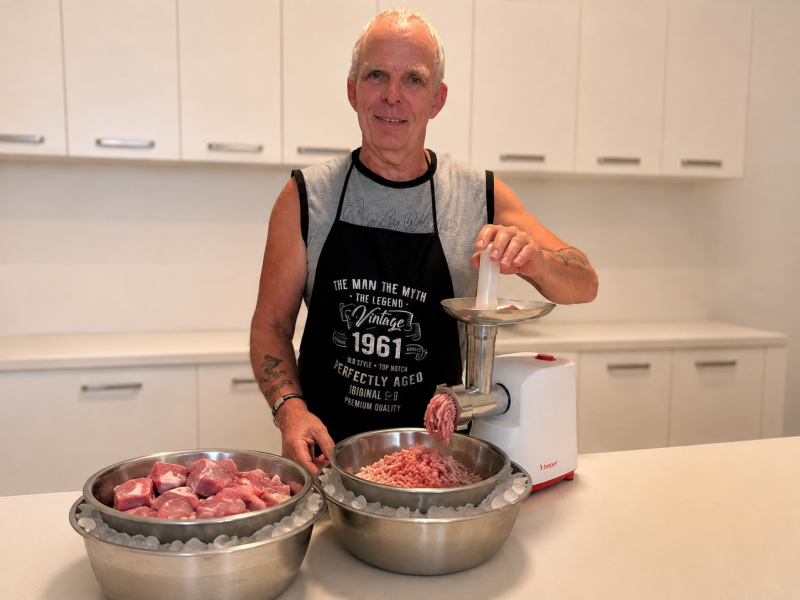
A meat grinder doesn't simply crush meat. A correctly assembled grinder uses the rotating knife against the stationary grinding plate to cut the meat into particles.
The size of the holes in the plate determines the approximate size of those particles, but plate size is only part of the equation.
The temperature of the meat, sharpness of the knife and plate, speed of grinding and number of passes through the grinder all influence the final texture.
The Single Grind
A single grind means passing the prepared meat and fat through the grinder once using the plate specified by the recipe.
This is often all that's required for fresh sausages, BBQ sausages and other products where we want to retain some visible structure in the meat and fat.
For example, grinding once through a medium plate can produce a pleasantly rustic texture with clearly identifiable particles of meat and fat.
A single grind also has another advantage: the meat passes through the grinder only once, which means less handling and less opportunity for the mixture to warm up.
When a Single Grind Works Well
A single grind is particularly useful when:
- You want a coarse or rustic sausage texture.
- The recipe calls for clearly visible meat and fat particles.
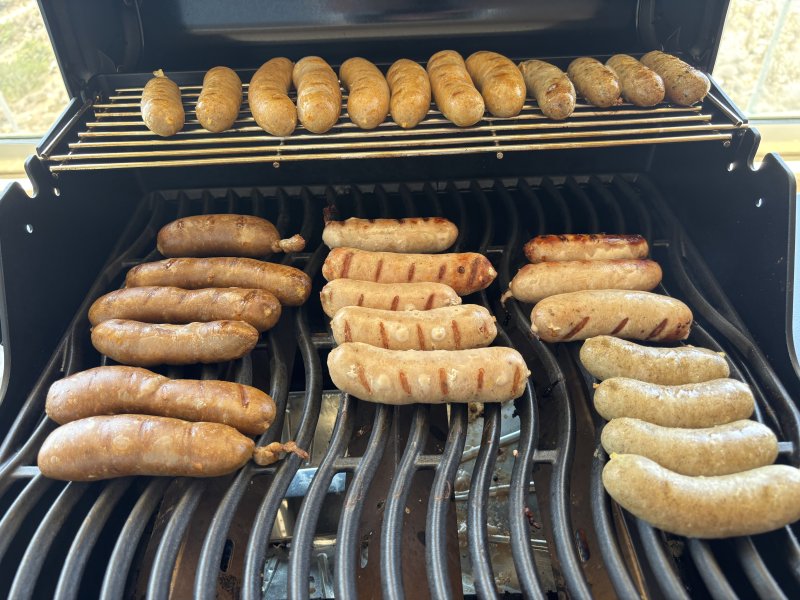
- You are making many fresh or BBQ-style sausages.
- The meat has already been cut into suitable grinder-sized pieces.
- The required final texture can be achieved with one appropriate grinding plate.
There is no benefit in grinding meat a second time simply because you can. If the first grind produces the texture you want, you're finished.
Why Grind Twice?
A second grind reduces the particle size further and creates a more uniform mixture.
This can be useful for finer bratwursts, some cooked sausages and recipes where a smoother, more cohesive texture is desired.
There are two common approaches to double grinding.
Coarse First, Fine Second
One common method is to pass the meat through a coarse plate first and then grind it again through a smaller plate.
For example, a recipe might call for an initial grind through an 8 mm plate followed by a second grind through a 3 or 5 mm plate.
The first pass reduces larger pieces of meat and fat to a manageable, relatively uniform size. The second pass then produces the finer final texture.
This approach can be particularly useful when working with larger pieces of meat or when making sausages requiring a fine but still recognisably ground texture.
Grinding Twice Through the Same Plate
You can also pass the meat through the same grinding plate twice.
The second pass further breaks down the particles and produces a somewhat finer and more uniform texture than a single pass through that plate.
This can be useful when you want something between a coarse single grind and a very fine grind through a much smaller plate.
Again, the desired texture of the sausage should determine whether this is necessary.
Chill Again Before the Second Grind
This is particularly important.
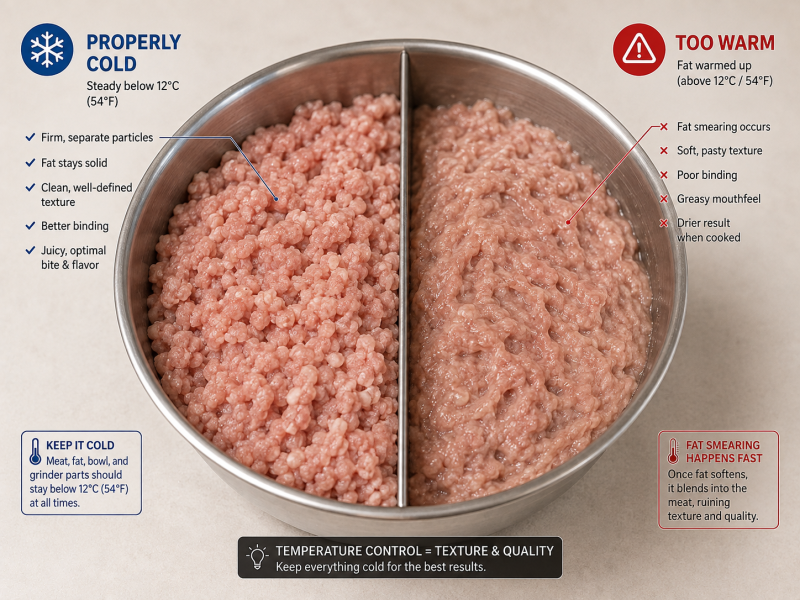
Grinding generates heat. After the first pass, the meat and fat may no longer be as cold and firm as they were when you started.
If the recipe requires a second grind, don't automatically feed the freshly ground meat straight back through the grinder.
If necessary, spread the first grind in a shallow stainless-steel tray or bowl and return it to the freezer until it is thoroughly chilled and firm again.
The second grind should begin with meat that is just as cold as it was for the first.
Watch the Fat
The more often meat passes through the grinder, the more opportunities there are for the fat to soften and smear.
With a good clean grind, you should still be able to distinguish the fat from the lean meat.
If the mixture begins looking greasy, pasty or smeared, stop. Check the temperature of the meat and make sure the grinder knife and plate are clean, correctly assembled and sharp.
A second grind through warm meat will not improve the texture—it will usually make it worse.
Fine Grinding Is Not the Same as Emulsifying
This is another useful distinction.
Repeatedly passing meat through a fine grinder plate can produce a very fine ground mixture, but it doesn't automatically create a true sausage emulsion.
Fine sausages such as frankfurters, Lyoner and similar products usually require additional processing after grinding to develop their characteristic smooth texture.
In a home kitchen, this can often be achieved with a food processor rather than requiring a professional bowl cutter. We'll cover that technique separately.
You Can Also Grind Meat and Fat Differently
Not every ingredient in a sausage has to pass through the same grinding plate.
Some recipes benefit from grinding the lean meat more finely while leaving the fat slightly coarser. Others may combine different grinds to create a particular appearance and bite.
This becomes especially useful as you move beyond basic recipes and begin developing sausages of your own.
Let the Sausage Style Decide
Instead of asking whether single or double grinding is better, ask yourself what texture you're trying to achieve.
Do you want a rustic sausage with clearly visible pieces of meat and fat? A single medium or coarse grind may be exactly what you need.
Do you want a finer, more uniform bratwurst? A second grind or progressively smaller grinding plates may be appropriate.
Are you trying to produce a completely smooth frankfurter-style sausage? Grinding is only the beginning, and additional processing will be required.
Once you start thinking about grinding in terms of the finished texture rather than simply the number of passes through the grinder, you gain much greater control over your sausage making.
Dieter's Tip
If I'm grinding twice, I pay just as much attention to temperature before the second grind as I did before the first. If the meat has softened, it goes back into the freezer until it's firm again. Don't let a recipe saying "grind twice" tempt you into immediately feeding warm meat back through the grinder.