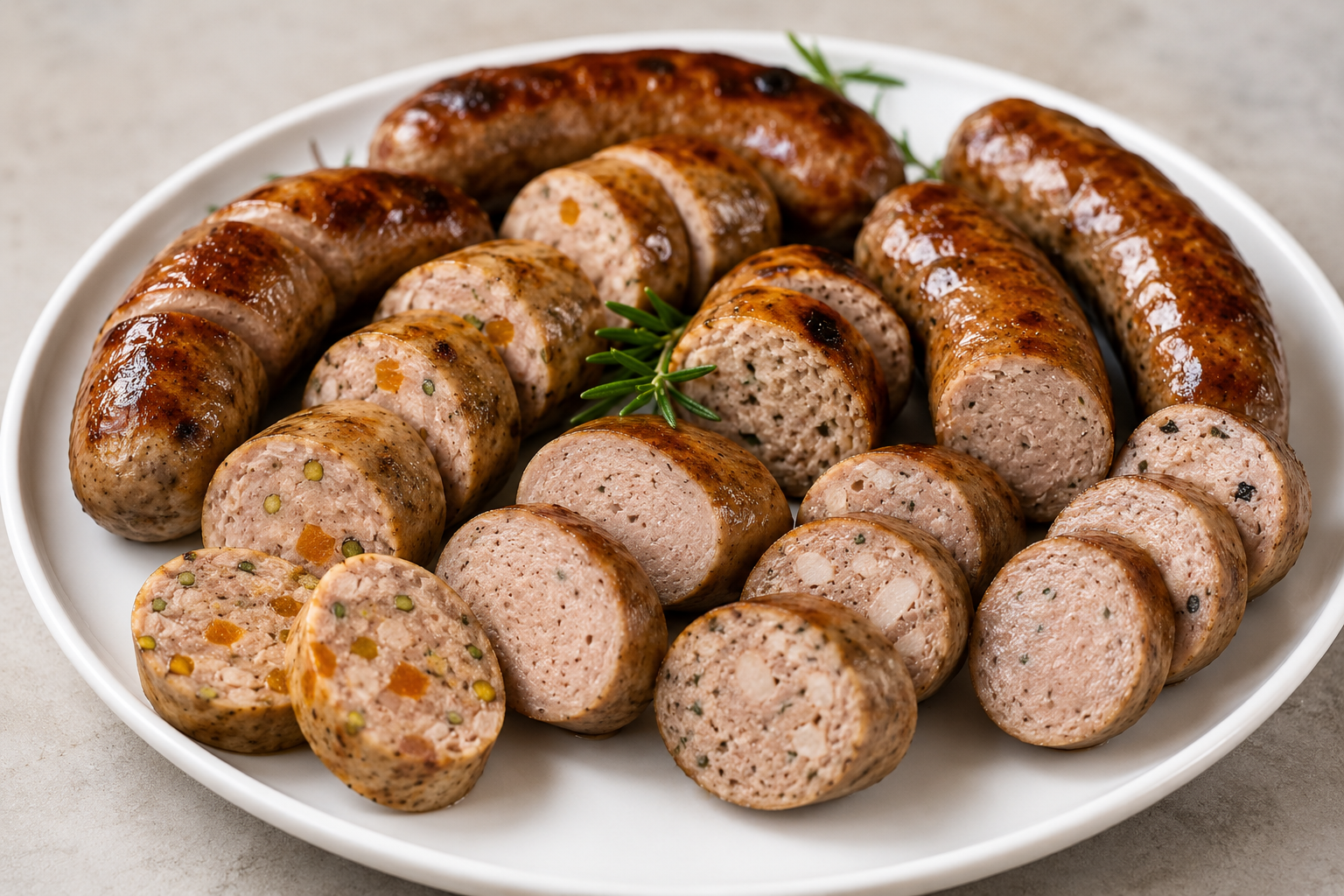
Open a typical set of meat grinder accessories and you'll probably find several plates containing holes of different sizes. If you're new to sausage making, the obvious question is: which one should I use?
There isn't one grinder plate that's best for every sausage. The correct choice depends on the texture you want to create.
A coarse country sausage should have a very different bite from a fine bratwurst, while a smooth frankfurter requires further processing beyond simply choosing a small grinding plate.
Understanding what the different plate sizes do gives you much more control over your finished sausages.
What Does the Grinder Plate Do?
Inside your grinder, the rotating knife cuts the meat against the stationary grinding plate. The meat then passes through the holes in that plate.
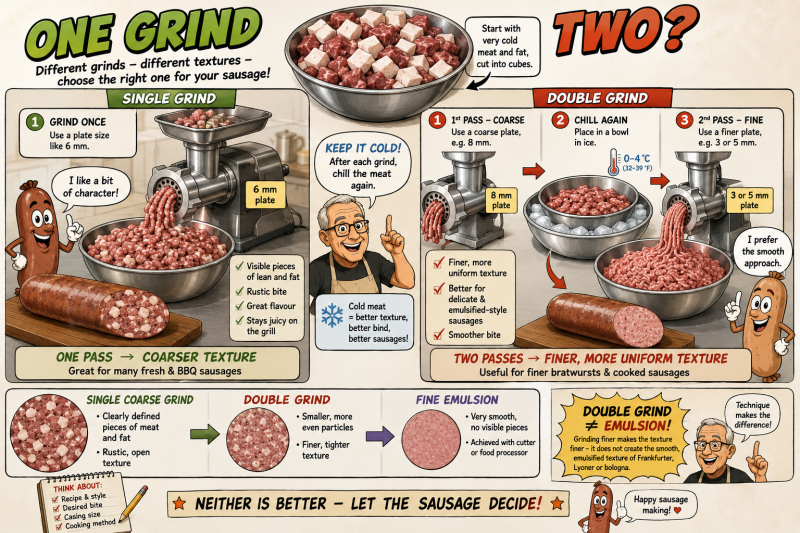
Generally, larger holes produce larger pieces of meat and fat, while smaller holes create a finer and more uniform grind.
But the plate isn't working alone. Meat temperature, grinder condition, knife sharpness and whether you grind once or several times all influence the final result.
3 mm – Fine Grinding
A 3 mm plate produces a relatively fine grind and is useful when you want a smooth, closely textured sausage mixture.
We use fine plates for some bratwursts, poultry sausages and as a preparation stage for sausages that will undergo further processing.
However, grinding through a 3 mm plate does not automatically create an emulsified sausage. Frankfurters, Lyoner and similar smooth sausages normally require additional processing after grinding.
4.5–5 mm – A Versatile Middle Ground
If I could choose only one plate for general home sausage making, a plate somewhere around 4.5–5 mm would be one of the most useful.
It produces enough definition to retain the character of the meat and fat while still giving the sausage a cohesive, pleasantly fine texture.
Many bratwursts, fresh pork sausages and general BBQ sausages work very well within this range.
6–8 mm – Coarse and Rustic
Moving up to a 6 or 8 mm plate produces noticeably larger particles of meat and fat.
This is useful for sausages where you want a more rustic bite and visible definition in the filling.
Coarser plates are also useful as the first stage of a double grind. Meat can first be passed through an 8 mm plate, chilled again and subsequently ground through a smaller plate.
10–12 mm – Very Coarse Grinding
Large plates in the 10–12 mm range produce a very coarse grind.
They can be useful for particularly rustic sausage styles, but I often find them most useful for the first pass when preparing meat for a second, finer grind.
The initial coarse grind breaks larger pieces into a more manageable and consistent size without immediately processing them into a fine mixture.
Plate Sizes Are Not Rules
It's tempting to create simple rules such as:
Bratwurst = 5 mm
Coarse sausage = 8 mm
Fine sausage = 3 mm
Unfortunately, sausage making isn't quite that simple—and that's actually part of what makes it interesting.
Two bratwurst recipes may intentionally use different grinding plates because they're designed to have different textures. One may be coarse and rustic while another is fine and delicate.
The plate size specified in a recipe should therefore be considered part of the recipe itself, just like the choice of meat, spices and casing.
The Same Plate Can Produce Different Results
Passing meat once through a 5 mm plate doesn't necessarily produce exactly the same texture as passing it through that plate twice.
Likewise, grinding first through an 8 mm plate and then through a 5 mm plate creates a different degree of processing than simply grinding once through 5 mm.
We look at these differences in more detail in Single Grind vs Double Grind: When to Use Each.
Meat and Fat Don't Always Need the Same Plate
As you become more experienced, you can begin treating the lean meat and fat separately.
For example, a recipe might benefit from finely ground lean meat combined with slightly coarser pieces of fat. This creates a sausage with a firm bind while still retaining visible fat definition.
Other recipes may combine coarse and fine portions of the same meat to create a particular texture.
There is no requirement that every ingredient must pass through the same grinding plate.
Keep the Plate and Knife Cold
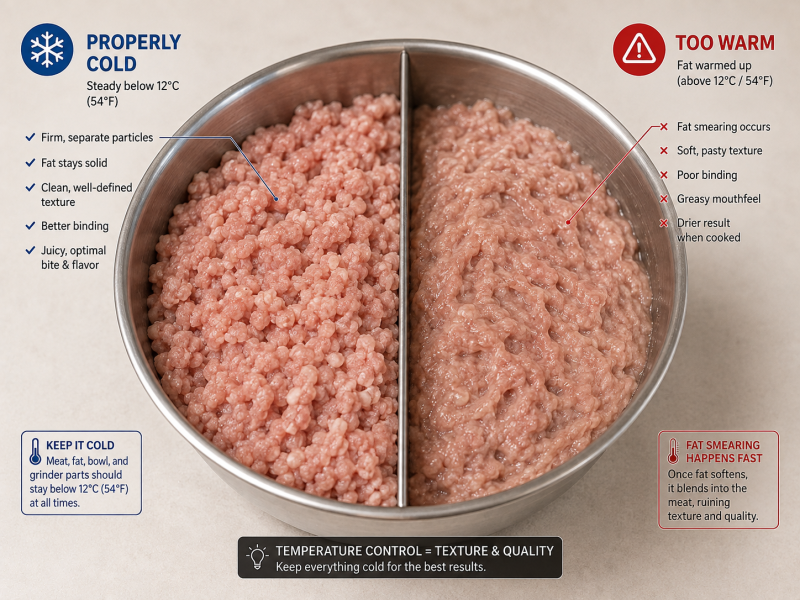
Regardless of which plate you choose, temperature remains critical.
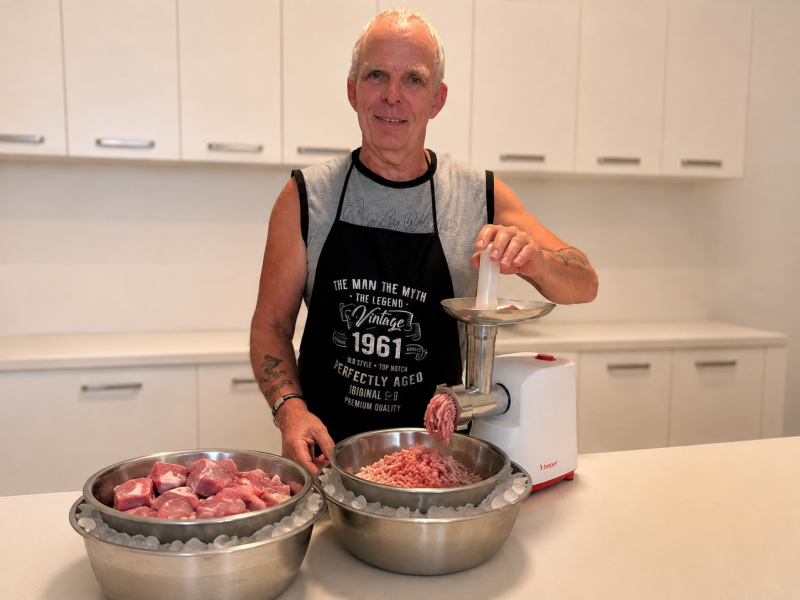
Place the grinding plate and knife in the freezer while your prepared meat is chilling. Starting with cold metal helps reduce the amount of heat transferred to the meat during grinding.
Your meat and fat should also be thoroughly chilled and firm before they enter the grinder.
A Sharp Knife Matters Just as Much
If your grinder produces smeared meat instead of clearly defined particles, don't immediately blame the plate size.
The knife must sit flat against the plate and both cutting surfaces need to be in good condition. A dull knife or worn plate can tear and crush the meat rather than cutting it cleanly.
This becomes particularly noticeable when using smaller grinding plates.
Don't Force Meat Through a Fine Plate
Fine plates create greater resistance than coarse ones. Feed the meat steadily and allow the grinder to do the work.
If the grinder is struggling, meat is backing up in the feed tube or the mixture is becoming smeared, stop and find the cause rather than applying more pressure.
The meat may have become too warm, connective tissue may be wrapped around the knife, or the grinder may simply need cleaning.
Choosing a Plate for Your Own Recipe
When you're developing a sausage recipe yourself, begin by thinking about the finished texture.
Do you want clearly visible pieces of meat and fat? Start with a larger plate.
Do you want the familiar texture of a general-purpose bratwurst or BBQ sausage? A medium plate is a sensible starting point.
Do you want something finer and more delicate? Move towards a smaller plate or consider a staged double grind.
Then make the sausage, cook it and look at the cut surface as well as tasting it.
If the texture is too coarse, you can use a smaller plate next time. If it feels too fine or dense, move in the opposite direction.
Let Texture Guide Your Choice
Choosing a grinder plate isn't about memorising which number belongs to which sausage.
It's about understanding that plate size is one of the tools you can use to control texture.
Once you begin looking at the inside of your finished sausages and connecting what you see and feel with the plate you used, choosing the right grinder plate becomes increasingly intuitive.
Reference: Common Grinder Plate Sizes
| Plate Size | Grind | Typical Uses |
|---|---|---|
| 3 mm | Fine | Fine bratwursts, some poultry sausages and preparation for further processing. |
| 4.5–5 mm | Medium | General bratwurst, fresh sausages and many BBQ sausages. |
| 6–8 mm | Coarse | Rustic sausages, coarse-textured products and first-stage grinding. |
| 10–12 mm | Very Coarse | Very rustic textures and first grinding stage before a finer second grind. |
These sizes are practical guidelines rather than fixed rules. The required plate depends on the sausage style, recipe and texture you want to achieve. Available plate sizes also vary between grinder manufacturers.
Dieter's Tip
Don't buy every grinder plate you can find when you're starting out. A fine, medium and coarse plate will cover an enormous range of homemade sausages. More important than owning ten different plates is learning what the few plates you already have do to the texture of your sausages.