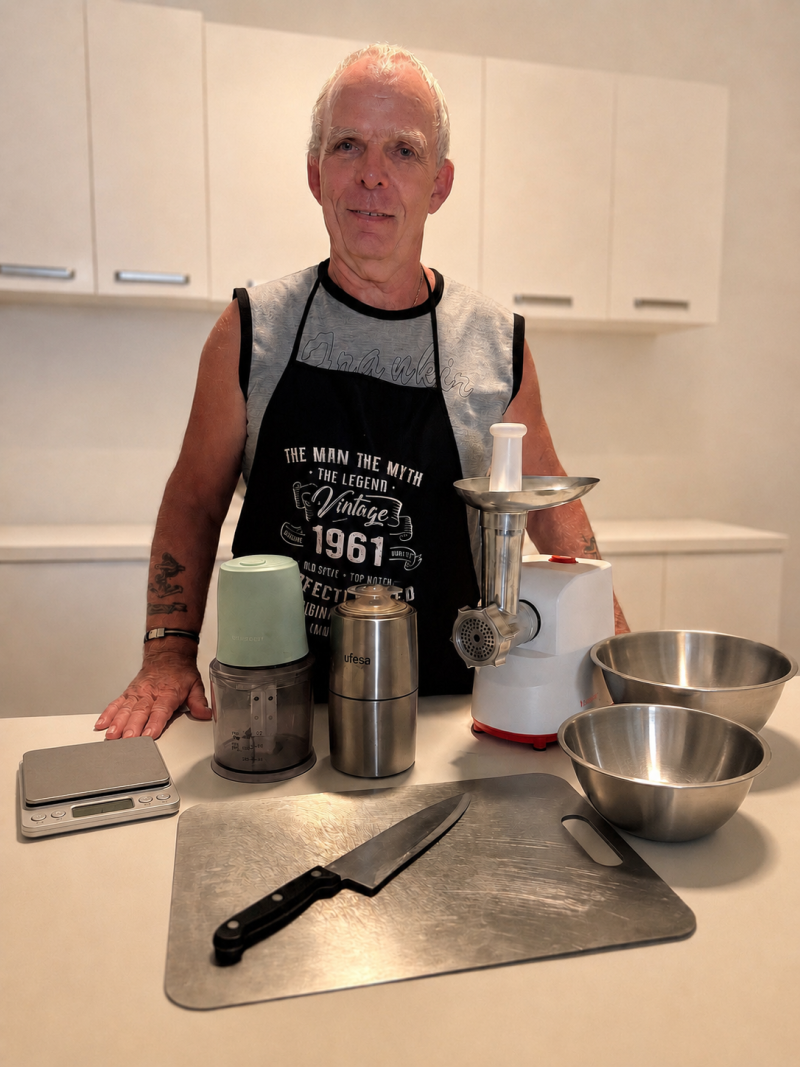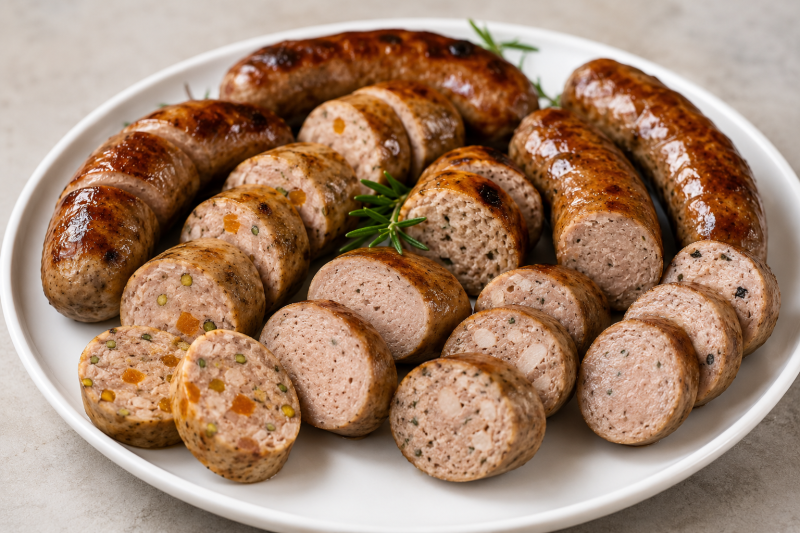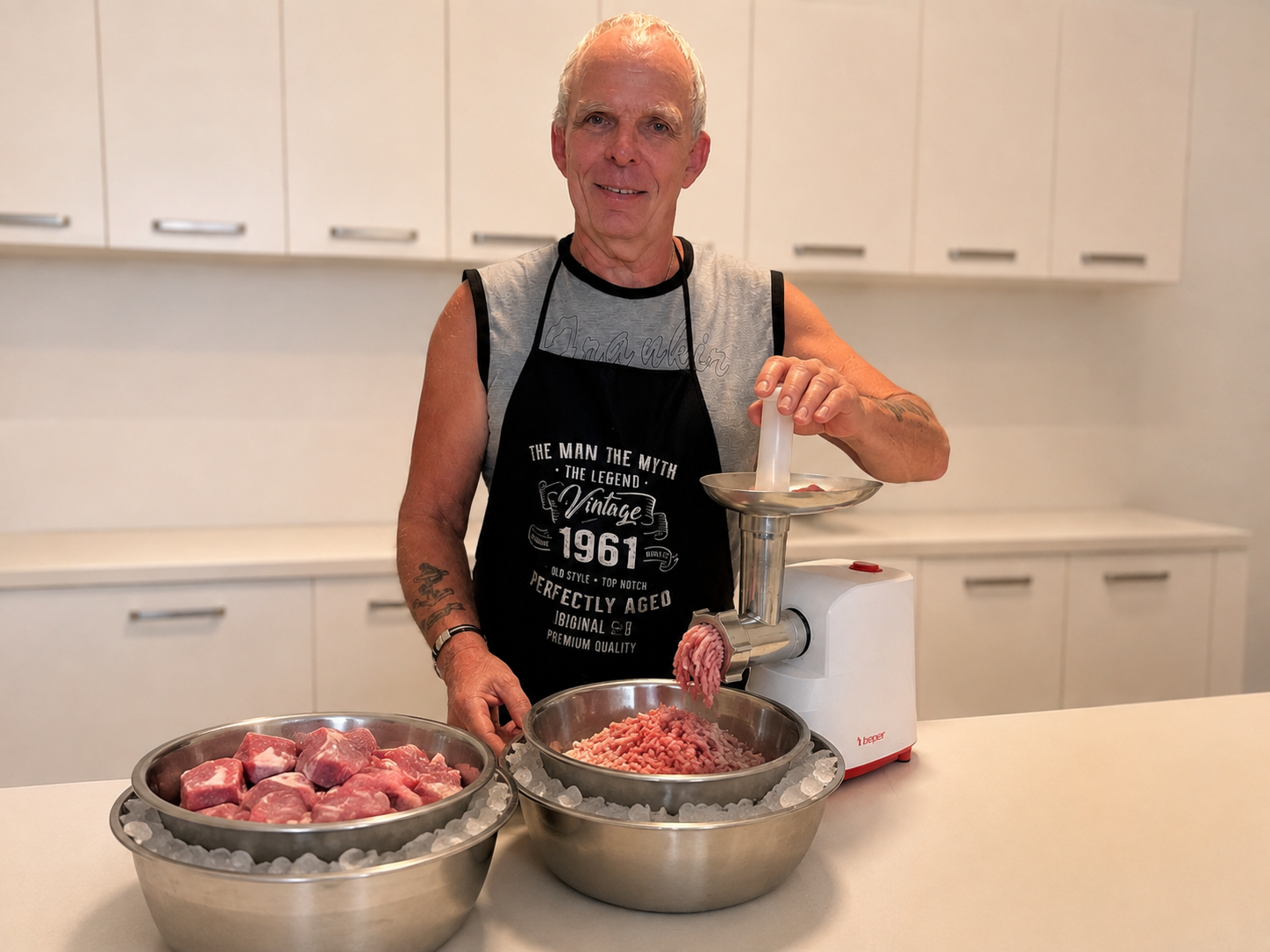
Now that your meat has been properly prepared and thoroughly chilled, it's time for one of the most satisfying parts of sausage making—grinding.
A good grind creates the foundation for every sausage. It determines the texture, helps distribute the fat evenly throughout the mixture and prepares the meat for proper mixing and protein binding.
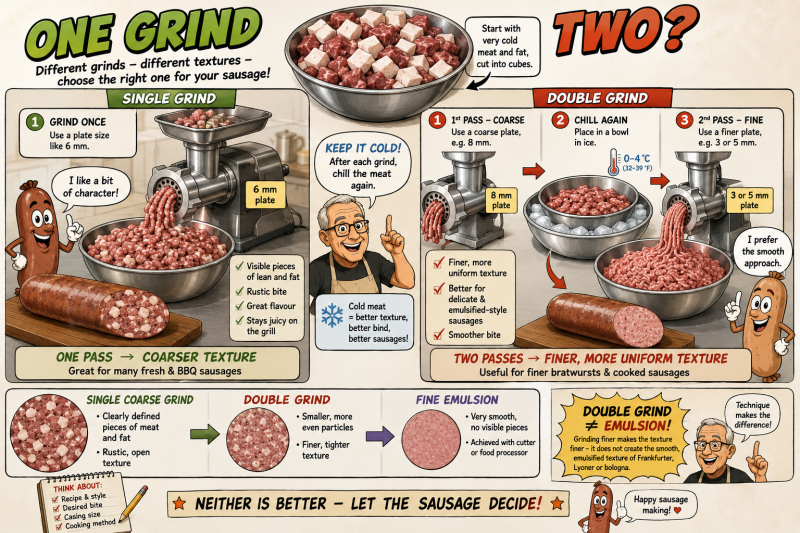
Choose the Right Grinding Plate
Different sausages require different textures. Fine sausages such as frankfurters 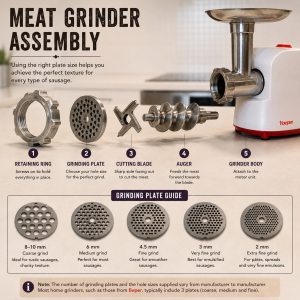 and emulsified products require a much finer grind than rustic country sausages or coarse bratwursts.
Most home sausage makers will find that a small selection of grinding plates is all they need for almost every recipe.
Feed the Grinder Steadily
Allow the grinder to do the work. Feed the meat into the hopper steadily without forcing it. Pushing too hard can overload the grinder and generate unnecessary heat.
If you're using an electric grinder, maintain a steady flow of meat rather than adding large amounts all at once.
Watch the Temperature
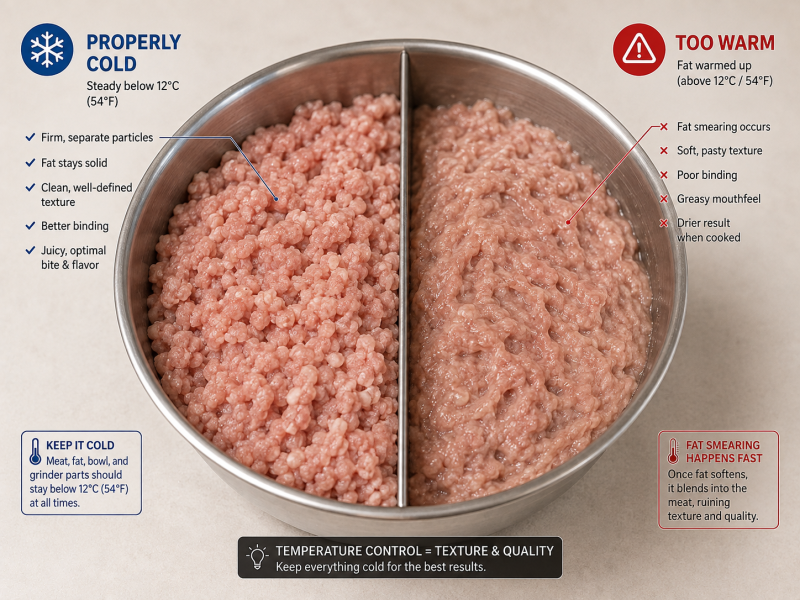
The meat should still feel very cold while it is being ground. If you notice it becoming soft or warm, stop for a few minutes and return both the meat and the grinder parts to the refrigerator or freezer if necessary.
Keeping everything cold remains just as important during grinding as it was during preparation.
A Good Grind Should Look Clean
Properly ground meat has a fresh appearance with clearly defined particles of lean meat and fat. The fat should remain visible as small white pieces rather than being smeared across the meat.
If the mixture looks pasty or greasy, the meat has probably become too warm or the grinder knife may need sharpening.
Should You Grind Twice?
Some recipes call for a second grind through a finer plate to achieve a smoother texture. Others are designed to retain a coarser, more rustic appearance.
Always follow the method given in the recipe. There is no single correct grind for every sausage.
Ready for Mixing
Once the meat has been ground, transfer it immediately to a chilled stainless-steel bowl and return it to the refrigerator if you are not mixing it straight away.
The next stage—mixing—develops the protein bind that gives a sausage its characteristic texture and ensures all the ingredients are evenly distributed.
Reference: Common Grinding Plate Sizes
| Plate Size | Typical Use | Comments |
|---|---|---|
| 3 mm | Fine sausages, emulsified mixtures | Produces a smooth texture and is often used for chicken sausages and frankfurters. |
| 4.5–5 mm | Most bratwursts and fresh sausages | A versatile size suitable for many traditional recipes. |
| 6–8 mm | Coarse sausages | Ideal for rustic sausages where a more open texture is desired. |
| 10–12 mm | Very coarse products | Often used as a first grind before regrinding through a finer plate. |
Dieter's Tip
I always grind the meat directly into a chilled stainless-steel bowl sitting inside a larger bowl filled with ice. This keeps the temperature low throughout the grinding process and means the meat is already in the mixing bowl when I'm ready for the next step.