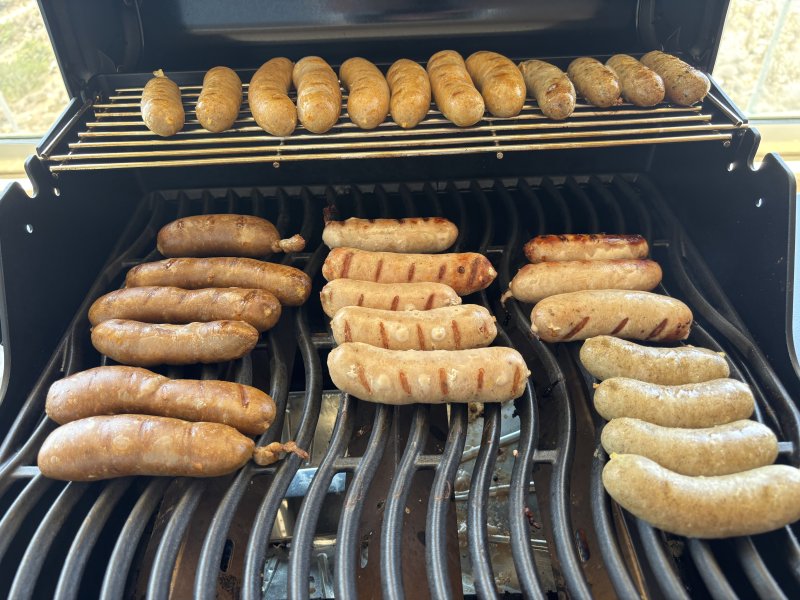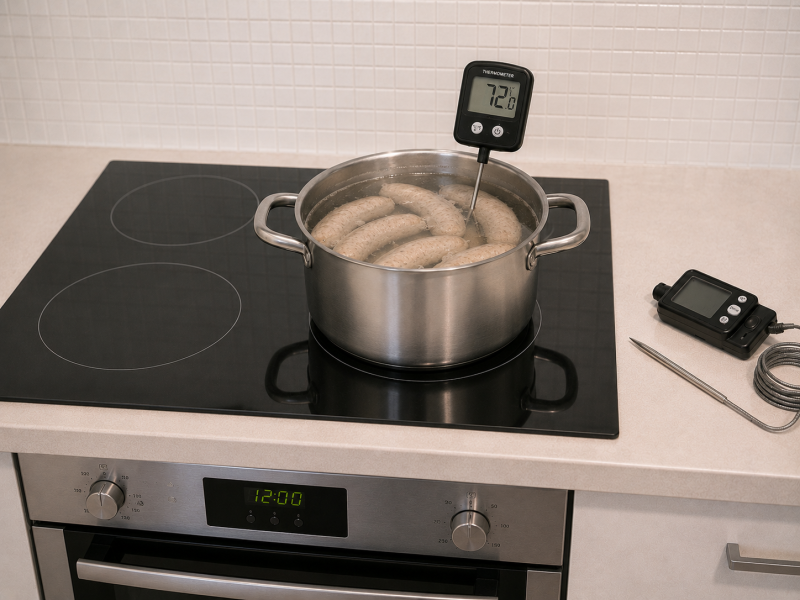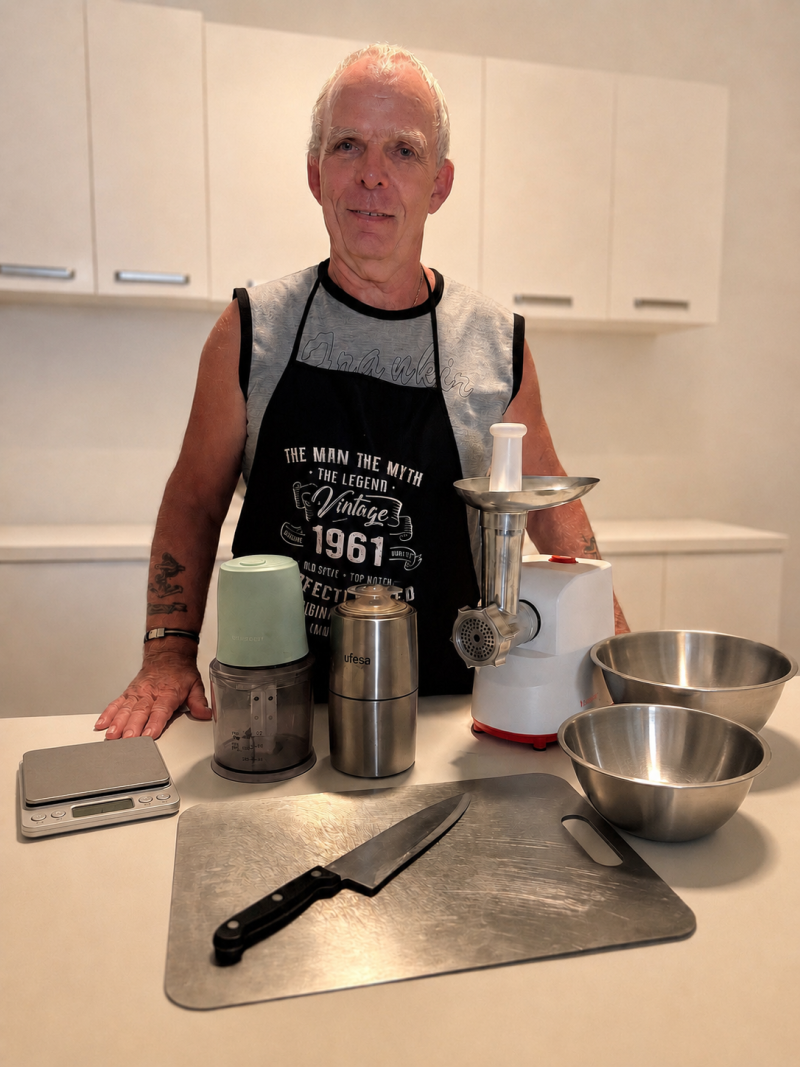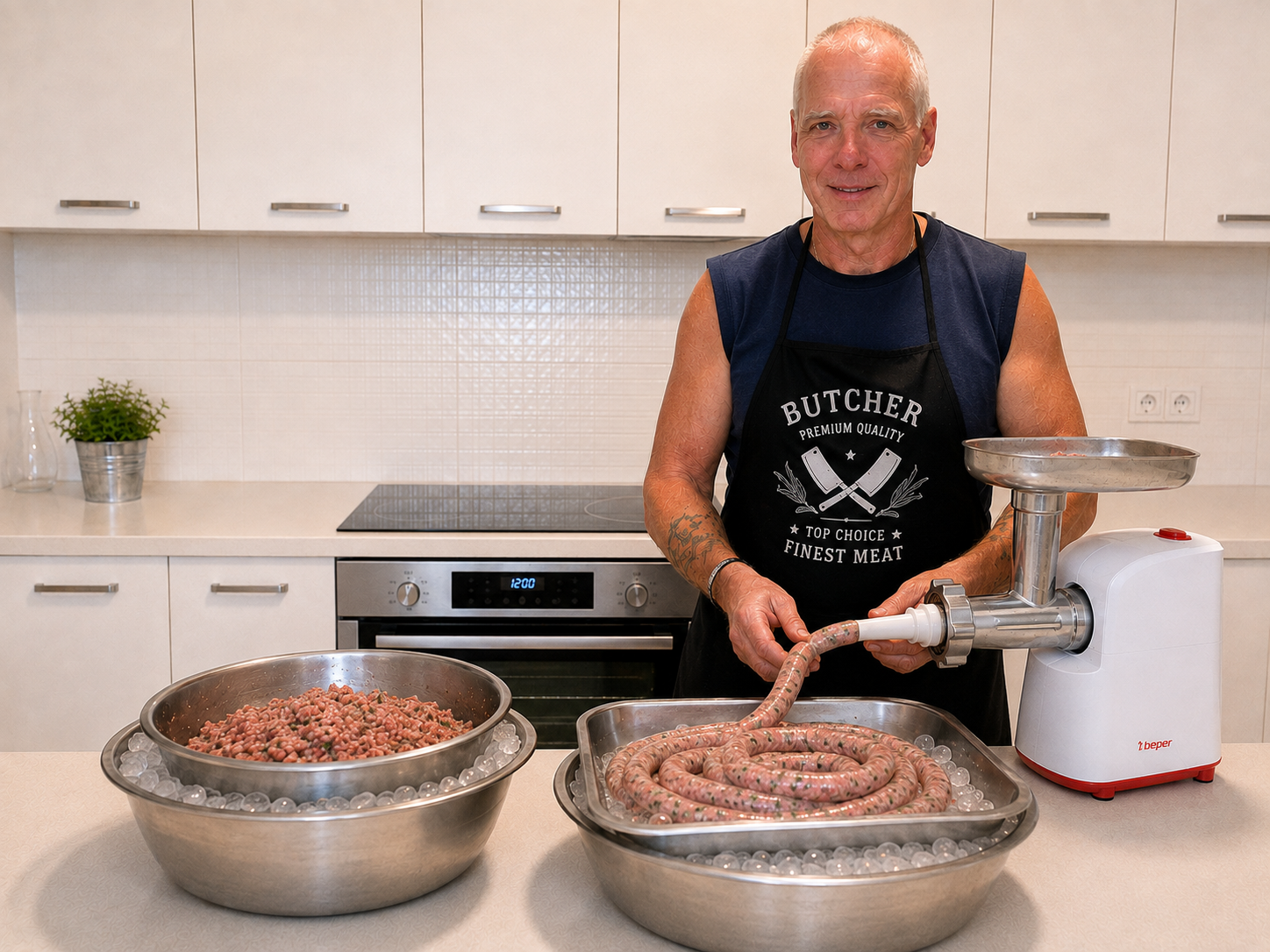
Your sausage mixture is cold, properly seasoned and has developed a good protein bind. Your casings are prepared and ready. Now comes one of the most enjoyable stages of sausage making—stuffing.
For many beginners, filling the casings can seem intimidating at first. Don't worry if your first few sausages aren't perfectly even. Controlling the casing and the flow of sausage meat is a skill that quickly improves with practice.
Prepare Everything Before You Begin
Before removing the sausage mixture from the refrigerator, make sure your stuffer is assembled, your casings are prepared and your work area is clear.
If you're using natural casings, keep them in clean water until you're ready to use them. Wet casings are easier to handle and slide more easily onto the stuffing tube.
Choose a stuffing tube that fits comfortably inside the casing. It should be large enough to allow the sausage mixture to flow easily, but not so large that loading the casing becomes difficult.
Fill the Stuffer Carefully
When loading a sausage stuffer, press the mixture firmly into the cylinder as you fill it. Try to avoid leaving pockets of air between portions of sausage meat.
Air trapped inside the stuffer will eventually find its way into the casing, creating unwanted air pockets in your sausages.
If you're using the stuffing attachment on a meat grinder, the same principle applies: feed the sausage mixture steadily and try to maintain a continuous flow.
Loading the Casing
Slide the prepared casing onto the stuffing tube, gathering it gently along the tube until only a short length remains hanging from the end.
At this stage, I prefer not to tie the end immediately. Start feeding a small amount of sausage mixture through the tube first. Once the mixture reaches the end and has pushed out any trapped air, you can tie the casing securely.
This simple technique helps prevent a large air pocket from forming at the beginning of your first sausage.
Finding the Right Filling Pressure
The casing should be filled firmly and evenly, but not stretched to its limit.
If you fill it too loosely, the sausages may wrinkle and contain air pockets. If you stuff too tightly, the casing may burst during stuffing, linking or cooking.
Remember that you'll still need enough flexibility in the casing to twist or link the individual sausages afterwards.
Finding the right pressure is largely a matter of feel, and it becomes much easier after you've stuffed a few batches.
Control the Casing, Not the Meat
Once the sausage mixture is flowing steadily, concentrate on controlling how quickly the casing leaves the stuffing tube.
Allowing the casing to slide off more quickly produces a looser fill. Holding it back slightly produces a firmer sausage.
Try to maintain gentle, consistent resistance rather than repeatedly stopping and starting.
What About Air Pockets?
Even experienced sausage makers occasionally get small air pockets in their sausages. They aren't a disaster.
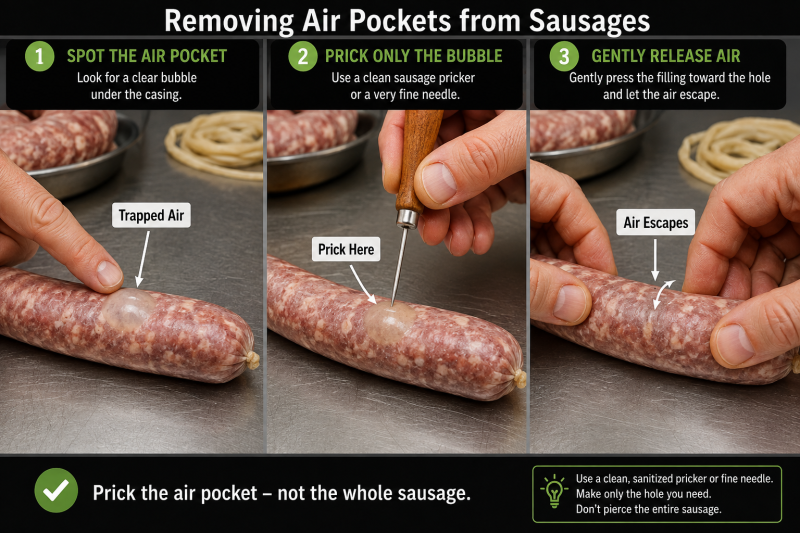
Small visible pockets can be released by carefully pricking the casing with a clean sausage pricker or fine sterile needle and gently pressing the trapped air towards the hole.
Avoid unnecessarily piercing the casing all over. Only release air where it is actually needed.
If a Casing Bursts
At some point, a casing will burst. It happens to everyone.
Stop the stuffer, remove the damaged section and tie or twist the casing so you can continue. The sausage mixture from the damaged section can simply be returned to the stuffer.
A burst casing is usually nothing more than a minor interruption.
Keep the Sausage Mixture Cold
As with grinding and mixing, temperature remains important during stuffing. Keep any sausage mixture you're not currently using in the refrigerator.
For larger batches, consider filling the stuffer in smaller portions rather than leaving the entire mixture sitting at room temperature.
Stuff First, Link Afterwards
For most sausages, I find it easiest to fill one continuous length of casing first and form the individual sausages afterwards.
This allows you to concentrate on achieving an even fill without simultaneously worrying about sausage length and twisting direction.
Once the casing has been filled, you're ready for the next skill—turning that long coil into evenly sized sausage links.
Reference: Common Stuffing Problems
| Problem | Likely Cause | What to Do |
|---|---|---|
| Air pockets | Air trapped in the stuffer or casing. | Pack the stuffer carefully and release visible pockets with a sausage pricker or fine sterile needle. |
| Casing bursts while stuffing | Overfilling, damaged casing or excessive pressure. | Reduce the filling pressure and check the casing for weak areas. |
| Sausage feels too soft | Casing is being filled too loosely. | Hold the casing back slightly as it leaves the stuffing tube. |
| Sausage is extremely firm | Casing is overfilled. | Allow the casing to move more freely from the stuffing tube. |
| Uneven thickness | Inconsistent casing resistance or irregular meat flow. | Maintain steady pressure and guide the casing smoothly. |
| Mixture becomes soft or greasy | Sausage mixture is becoming too warm. | Stop and chill the mixture before continuing. |
Dieter's Tip
Don't try to make your first sausages look perfect. Concentrate on maintaining an even fill without packing the casing too tightly. Speed and consistency come naturally with practice. A slightly uneven homemade sausage tastes every bit as good as a perfectly shaped one.