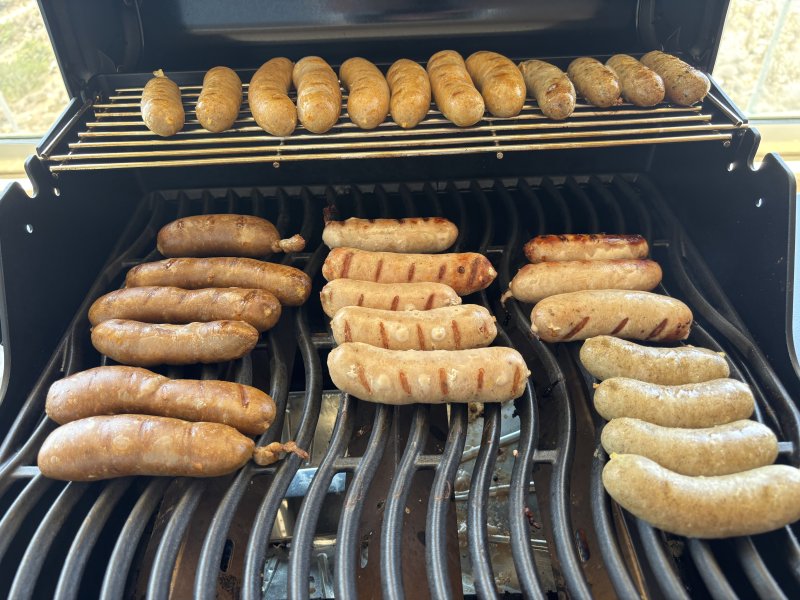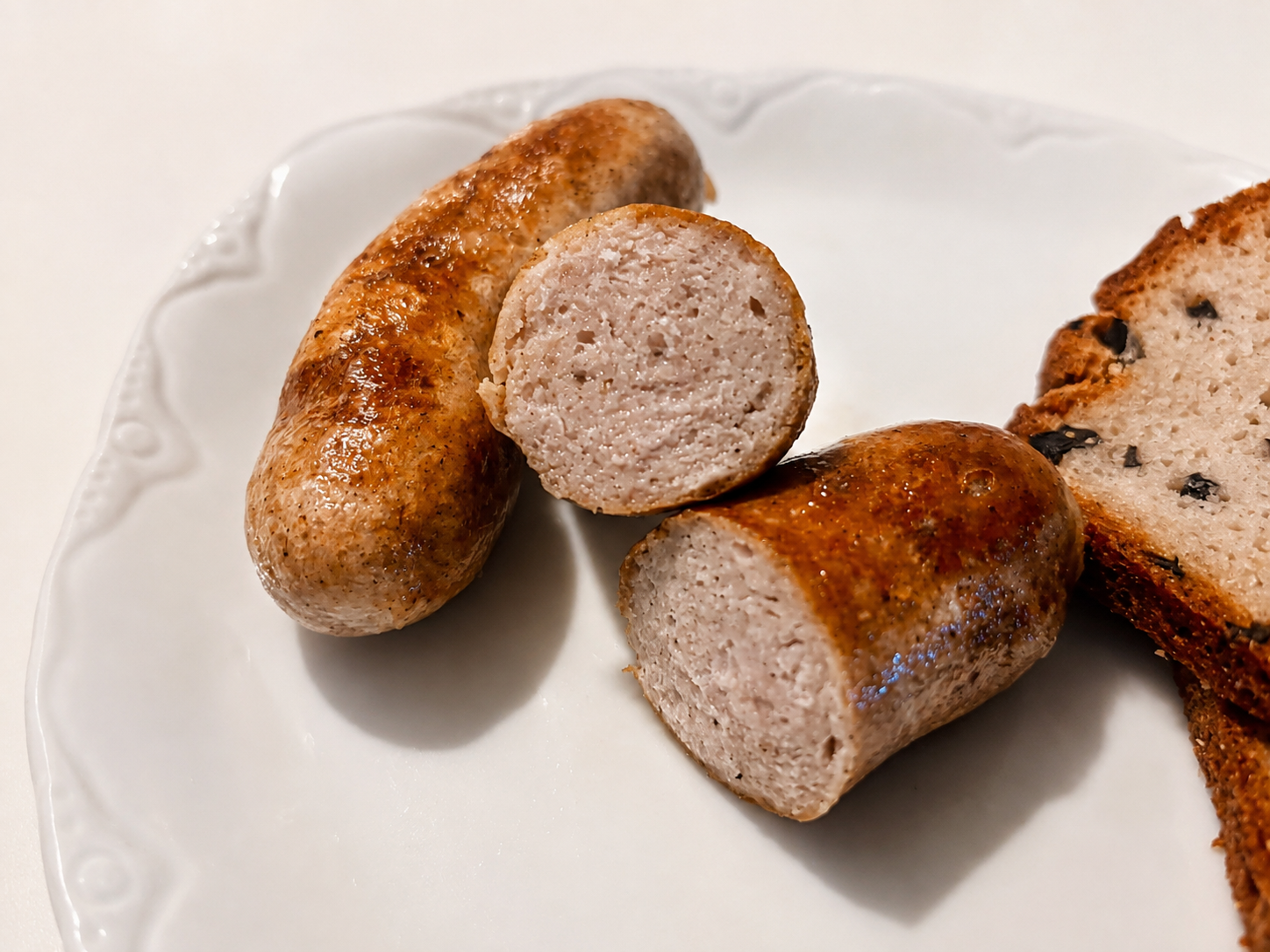
Ask any experienced sausage maker what makes a great sausage, and one of the first answers will almost certainly be fat.
Many beginners try to reduce the fat content as much as possible, believing it will produce a healthier sausage. While that may sound sensible, too little fat often results in sausages that are dry, crumbly and lacking in flavour.
Fat isn't simply there to add richness. It plays an important role in texture, moisture retention and mouthfeel. During cooking, it helps keep the sausage juicy while carrying many of the flavours from the herbs and spices throughout the meat.
How Much Fat Do You Need?
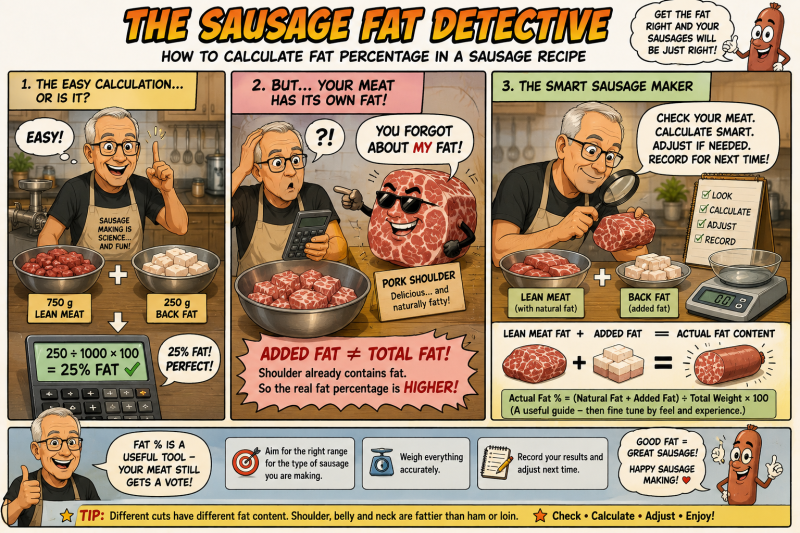
The ideal fat content depends on the type of sausage you're making, but for most fresh and cooked sausages, a total fat content of around 20–30% produces excellent results.
Some lean poultry sausages may benefit from additional pork back fat, while certain regional specialities use even higher fat levels to achieve their traditional texture.
Choosing the Right Fat
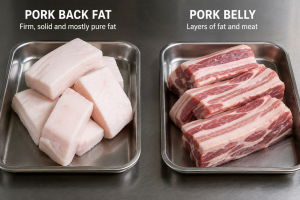
Not all pork fat behaves in the same way. The two types most commonly encountered by home sausage makers are pork back fat and the fat contained in pork belly.
Pork back fat is the firm layer of fat taken from beneath the skin along the animal's back. It is usually clean, white and relatively free from lean meat. Because it remains firm when chilled and holds its structure well during grinding and cooking, it is generally the preferred fat for adjusting the fat content of a sausage recipe.
Pork belly contains alternating layers of meat and softer fat. It can provide excellent flavour and richness, but it cannot always be treated as pure fat when calculating a recipe because part of its weight consists of lean meat. Its softer fat also melts more readily during processing and cooking.

Can I Make Lean Sausages?
Yes—but lean sausages require careful recipe development. Simply removing the fat from a traditional recipe rarely produces a satisfying result.
If you prefer a lighter sausage, choose naturally lean meats such as chicken or turkey thighs and reduce the fat gradually rather than removing it altogether. This helps maintain a pleasant texture while still reducing the overall fat content.
Balance is the Key
Making great sausages isn't about using the least fat possible. It's about finding the right balance between lean meat and fat for the style of sausage you're making.
Once you understand that balance, you'll notice a remarkable improvement in both flavour and texture.
Reference
Fat Guide at a Glance
| Sausage Type | Recommended Fat Content | Notes |
|---|---|---|
| Fresh pork sausages | 20–30% | Ideal for most bratwursts and BBQ sausages. |
| Beef & pork sausages | 20–25% | Beef is leaner, so pork fat is often added. |
| Chicken sausages | 20–25% | Chicken thighs plus pork back fat work well. |
| Turkey sausages | 20–25% | Usually benefit from added pork back fat. |
| Dry-cured sausages | 25–35% | Higher fat contributes to texture during drying. |
| Liver sausages | Varies by recipe | Texture depends on the balance of meat, liver and fat. |
Dieter's Tip
Never trim away good-quality fat just because it looks excessive. A sausage with the correct amount of fat will be juicier, more flavourful and far more enjoyable than one that's overly lean.