For many beginners, sausage casings are one of the most intimidating parts of making homemade sausages. With so many sizes and types available, it's easy to think you've entered a whole new world.
The good news is that choosing the right casing is much easier than it first appears. Once you understand the differences, selecting the correct casing quickly becomes second nature.
What Are Sausage Casings?
Sausage casings are simply the outer skin that gives a sausage its shape during stuffing and cooking. They help hold the meat mixture together, protect it during preparation and contribute to the final texture of the sausage.
Today, home sausage makers can choose between natural and manufactured casings, each with its own advantages.
Natural Casings
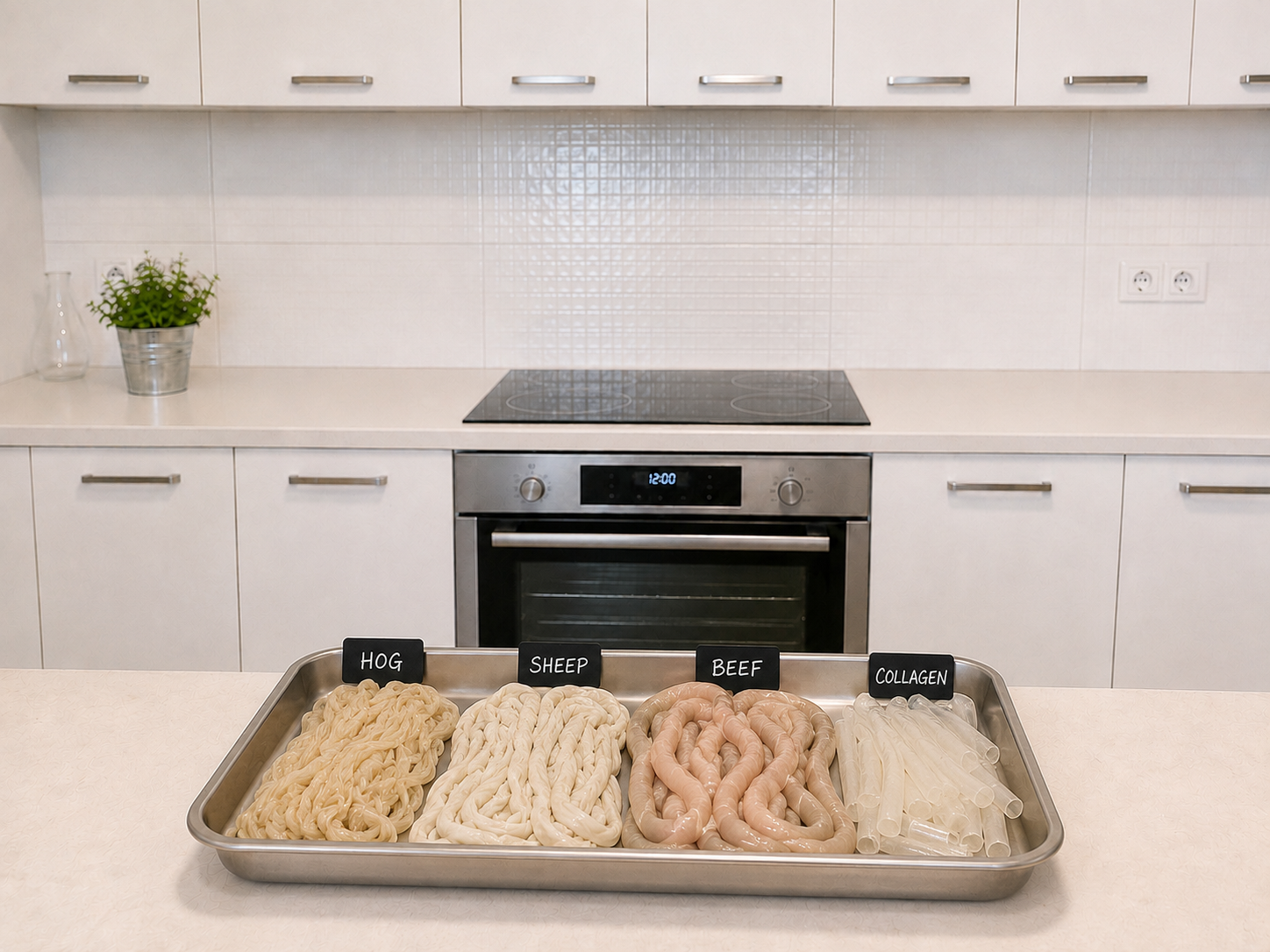
Natural casings are cleaned intestines from sheep, pigs or cattle. They have been used for centuries and remain the preferred choice for many traditional sausages.
Natural casings are edible, have an excellent bite and allow smoke and moisture to pass through easily, making them ideal for fresh, cooked and smoked sausages.
Collagen Casings
Collagen casings are manufactured from natural collagen. They are supplied in consistent diameters, are easy to use and are popular with beginners because they require very little preparation.
Many fresh sausages are successfully made using collagen casings.
Cellulose Casings
Cellulose casings are mainly used for skinless sausages such as frankfurters. They are removed after cooking and are generally not used by home sausage makers.
Fibrous Casings
Fibrous casings are strong, non-edible casings used for larger smoked sausages, salami and cooked meat products. They provide excellent support for larger diameter products.
Preparing Natural Casings
Natural casings are normally preserved in salt. Before use they should be rinsed thoroughly, soaked in clean water and flushed internally to remove any remaining salt and to check for holes.
Well-prepared casings are easier to load onto the stuffing tube and produce better-looking sausages.
Choosing the Right Size
The diameter of the casing determines the finished size of your sausage. Smaller sheep casings produce slim breakfast and Nürnberger-style sausages, while larger hog casings are commonly used for bratwurst and many fresh sausages.
As you gain experience, you'll naturally discover which casing sizes suit your favourite recipes.
Don't Let Casings Intimidate You
Almost every home sausage maker is a little nervous the first time they work with natural casings. After stuffing just a few batches, handling them quickly becomes routine.
Like every other aspect of sausage making, confidence comes with practice.
Reference: Common Sausage Casings
| Casing | Typical Diameter | Best For | Edible |
|---|---|---|---|
| Sheep | 20–26 mm | Breakfast sausages, Nürnberger Bratwurst, chipolatas | ✔ Yes |
| Hog | 28–36 mm | Bratwurst, Italian sausage, fresh sausages | ✔ Yes |
| Beef Middle | 45–65 mm | Large cooked and smoked sausages | ✔ Yes |
| Collagen | 19–36 mm | Fresh sausages, beginners | Usually Yes |
| Cellulose | Various | Skinless sausages | ✘ No |
| Fibrous | 40–120 mm | Salami, cooked hams, large smoked sausages | ✘ No |
Dieter's Tip
If you're making your first batch of sausages, don't worry if the casings seem difficult to handle. Every sausage maker has burst a casing or two while learning. Work slowly, keep the casings well lubricated with water and you'll soon find a comfortable rhythm.