When making sausages at home, particularly poached sausages such as bratwurst, temperature control is one of the most important parts of the process.
Over the years, I've learned that keeping an eye on the temperature makes a considerable difference to the final result. Fortunately, this doesn't require expensive professional equipment.
In my own kitchen, I use two inexpensive digital probe thermometers that I purchased from Temu. They are unbranded products, and I don't even know who manufactured them, but they are the thermometers I actually use when poaching my homemade sausages.
Why two? Because I want to know both the temperature of the poaching water and the temperature inside the sausage.
The Two Thermometers I Use
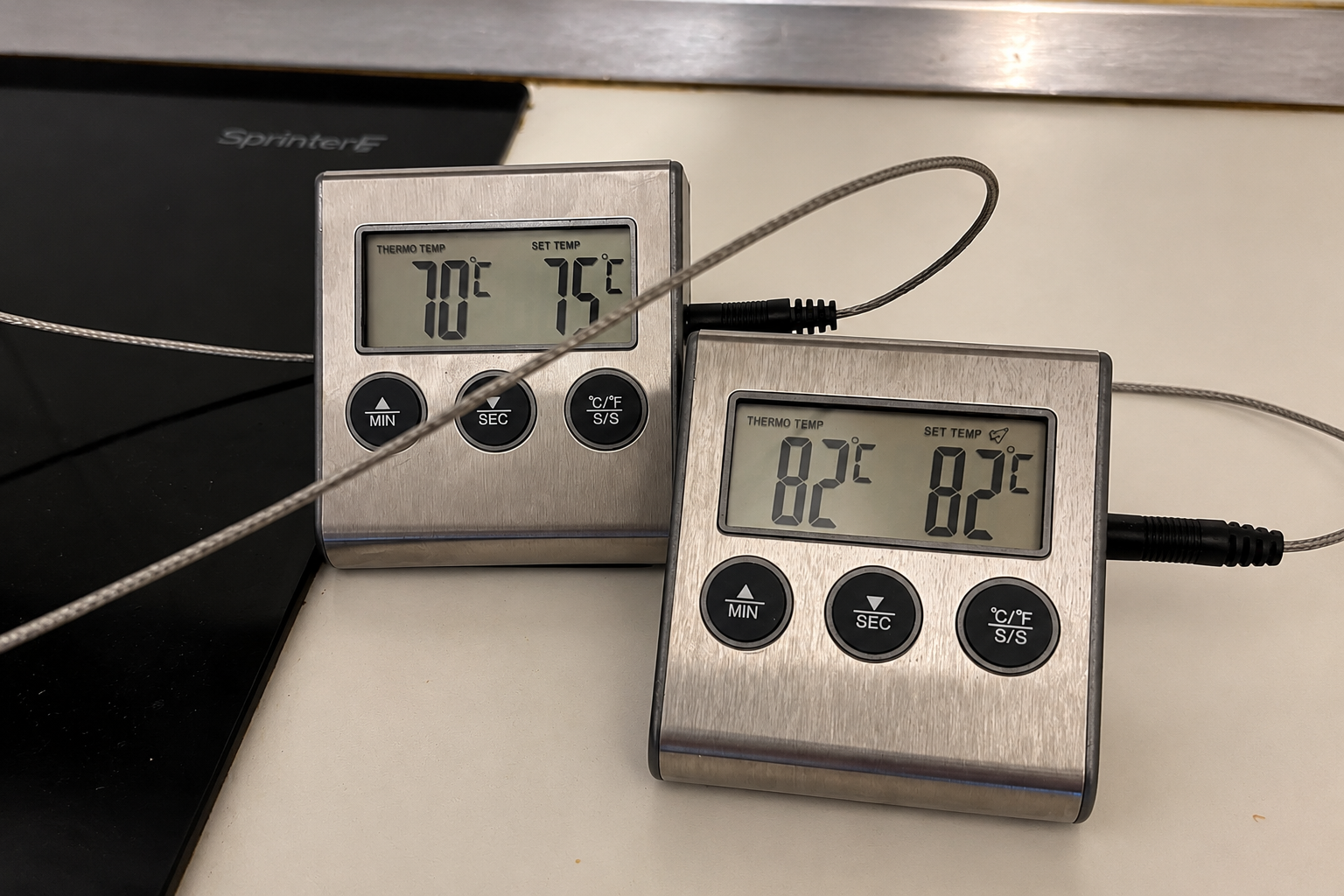
As you can see in my photograph, both thermometers have a stainless-steel housing, a digital display and an external temperature probe connected by a cable.
Each display shows two temperatures:
- THERMO TEMP: The actual temperature currently measured by the probe.
- SET TEMP: The temperature I have selected for the alarm.
When the measured temperature reaches the selected alarm setting, the thermometer provides an alert.
This is particularly useful because I don't have to watch the display continuously while preparing my sausages.
One important detail: these thermometers do not control the heating. They simply measure the temperature and alert me when the selected value is reached. I still adjust the heat on my hob manually.
Thermometer One: Monitoring the Poaching Water
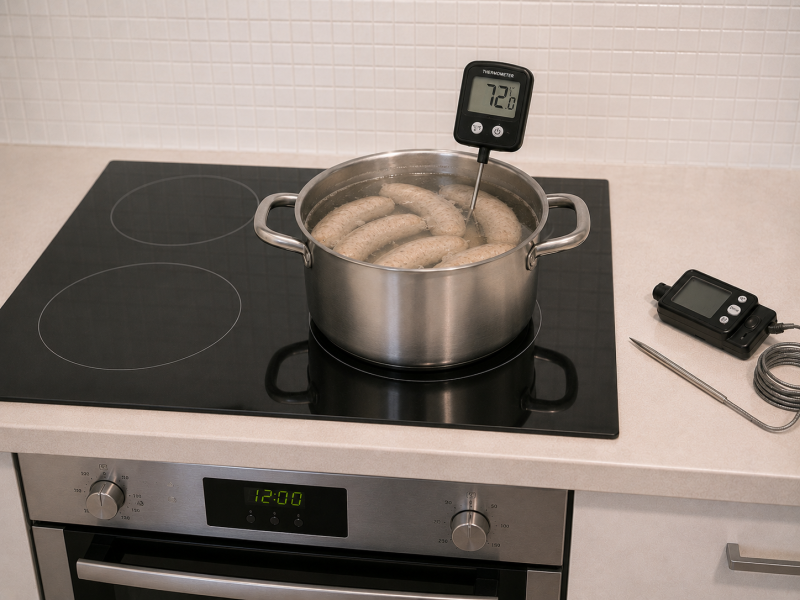
I use the first thermometer to monitor the temperature of the water in which the sausages are being poached.
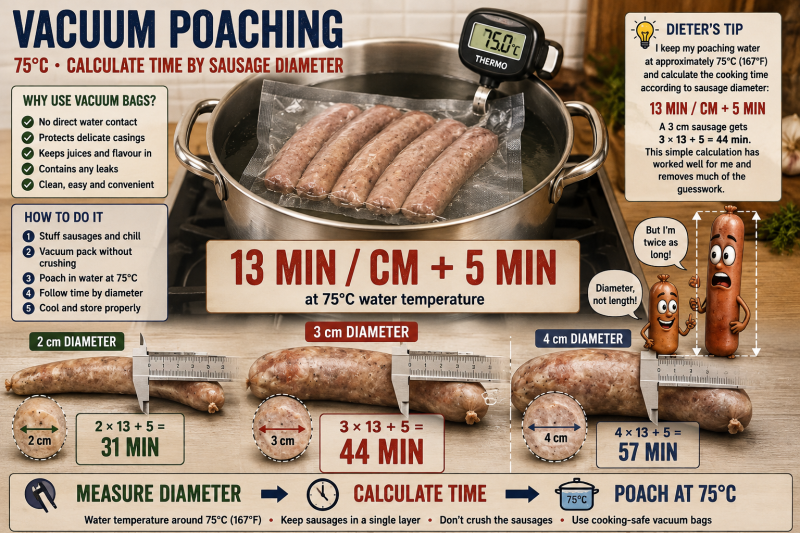
For many of my poached sausage recipes, I aim for a water temperature of approximately 72–75°C (162–167°F).
Instead of allowing the water to boil, I keep it at a controlled temperature. This helps the sausages cook gently and reduces the risk of damaged casings, fat separation and an undesirable texture.
I place the probe in the water, making sure it doesn't touch the bottom or sides of the pot, which could affect the reading.
I can then set the temperature alarm to a suitable value and monitor the actual water temperature on the display.
If the water becomes too hot or starts cooling down, I adjust the hob accordingly.
The thermometer doesn't do the cooking for me, but it makes controlling the process much easier.
Thermometer Two: Measuring the Temperature Inside the Sausage
The second thermometer has a different job.
Its probe goes into one of the sausages so I can monitor the internal temperature while the sausages are cooking.
I try to position the tip of the probe as close as possible to the centre of the sausage. With thinner sausages, this can be a little tricky, so inserting the probe carefully through the end of the sausage and along its length is often a practical solution.
I set the alarm to the internal temperature required for the particular recipe and cooking process.
When the alarm sounds, I know that the measured temperature has reached the selected value. I can then check the reading and confirm whether the sausages have completed their required cooking process.
The appropriate internal temperature depends on the type of sausage, the ingredients and the cooking method. I always recommend following the food safety requirements and cooking instructions for the particular recipe rather than assuming that one temperature is suitable for every sausage.
Why I Prefer Using Two Thermometers
Of course, it would be possible to make sausages using only one thermometer.
However, using two makes the process much more convenient.
With one probe in the water and the other inside a sausage, I can see what is happening in both places at the same time.
This is important because the water temperature and the internal sausage temperature are not the same.
Even when the poaching water has reached the correct temperature, the centre of the sausage will take additional time to heat up.
Using two thermometers means I don't have to keep removing and repositioning a single probe, and I can follow the cooking process without relying on guesswork.
For me, this simple arrangement has become a normal part of making poached sausages at home.
Understanding the Temperature Alarm
One feature I particularly appreciate is the adjustable temperature alarm.
Both thermometers show the measured temperature and the selected alarm temperature side by side.
For example, if I set an alarm to 75°C, the thermometer continues displaying the actual temperature measured by the probe while keeping 75°C visible as the alarm setting.
When the measured temperature reaches the selected value, the alarm alerts me.
This is useful for monitoring the internal temperature of sausages because I don't need to stand beside the pot constantly checking the display.
However, the alarm is simply a notification. It doesn't automatically switch off the hob or prevent the water temperature from continuing to rise.
For controlling the poaching water, I still need to watch the temperature and adjust the heat as necessary.
Do You Need Expensive Thermometers?
Not necessarily.
My thermometers are inexpensive, unbranded products purchased from Temu. I didn't buy them because of a particular manufacturer or a long list of technical specifications.
I bought them because I wanted a practical way to measure temperatures while cooking, and I now use both of them for my sausage making.
For me, the most useful features are the external probes, the clear digital displays and the adjustable temperature alarms.
Of course, a thermometer is only useful if its readings are sufficiently accurate.
Regardless of whether a thermometer is inexpensive or expensive, I recommend checking its accuracy against a reliable reference thermometer, especially when it is being used to make food safety decisions.
It is also worth checking that the probe and cable are suitable for the temperatures involved and following the manufacturer's instructions for cleaning and use.
A Few Practical Tips
- Keep the water probe away from the pot: The tip should measure the water temperature rather than the temperature of the metal pot.
- Position the sausage probe carefully: Try to place the tip near the centre of the sausage for a meaningful internal temperature reading.
- Use the alarm settings: They provide a useful reminder when a selected temperature has been reached.
- Don't confuse the two display values: One is the actual measured temperature, while the other is the alarm setting.
- Keep the electronic units dry: The display units should be protected from water, steam and excessive heat.
- Check accuracy periodically: Particularly when using inexpensive thermometers for cooking meat.
- Clean the probes properly: Especially after contact with raw sausage meat.
My Conclusion
These two thermometers are a good example of the equipment I like to use in my home kitchen.
They are inexpensive, simple to operate and do exactly what I need: allow me to monitor the water temperature and the internal temperature of my sausages at the same time.
I particularly appreciate having the adjustable temperature alarms, as they make it easier to follow the cooking process while getting on with other tasks in the kitchen.
They are not professional temperature controllers, and I still have to adjust the heat manually, but that isn't a problem for the relatively small batches of sausages I normally prepare.
For anyone starting out with homemade sausage making, I consider a reliable digital probe thermometer a very worthwhile piece of equipment.
And if you regularly poach sausages, having two thermometers is even more convenient.
Dieter's Tip: When poaching sausages, I recommend monitoring both the water temperature and the internal sausage temperature. Set the alarms to suitable values for your recipe, but remember that the alarm setting is not the actual measured temperature. It simply tells the thermometer when to alert you. Keeping track of both temperatures makes poaching much easier and helps you achieve more consistent results.