You've chosen your meat and fat, weighed the seasonings, ground everything carefully and mixed the sausage until you've developed a good bind.
You're almost ready to start stuffing.
But before loading the sausage stuffer, there's one small step that's well worth taking: cook a little of the mixture and taste it.
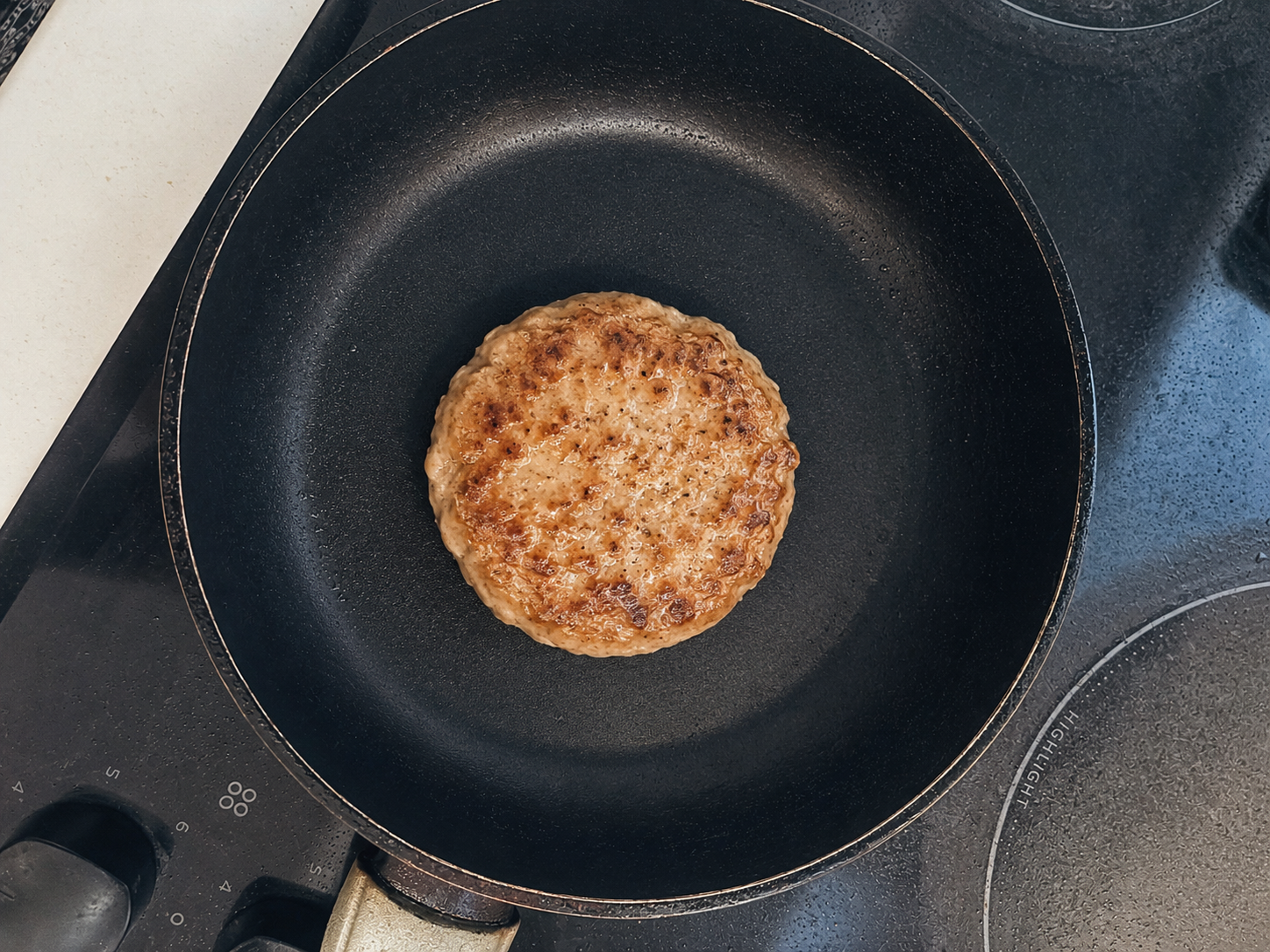
This is commonly known as a fry test, and it gives you one final opportunity to check your sausage before several metres of casing are filled.
Why Perform a Fry Test?
We can calculate salt percentages and carefully weigh every spice to a fraction of a gram, but ultimately we're making something to eat.
A fry test answers the most important question:
Does the sausage actually taste the way you want it to?
Perhaps you'd like a little more pepper. Maybe the garlic is stronger than expected. The chilli might be milder than the previous batch, or the herbs may need adjusting.
Before stuffing, most of these things are still easy to change.
After stuffing, correcting them becomes considerably more difficult.
What Can a Fry Test Tell You?
A fry test is useful for evaluating several aspects of your sausage mixture:
- overall saltiness;
- strength and balance of spices;
- chilli heat;
- garlic and herb intensity;
- general flavour balance;
- whether the mixture holds together during cooking;
- a general indication of the finished texture.
It can also reveal obvious problems. If the cooked sample crumbles apart when you expected a cohesive bratwurst, for example, you may want to look again at your mixing and protein development before stuffing.
How to Perform the Fry Test
You don't need to make a full-size sausage patty.
Take a small spoonful of the finished sausage mixture—approximately enough to form a small, thin patty.
Heat a small frying pan over moderate heat. You normally don't need additional oil if the sausage contains an appropriate amount of fat.
Flatten the sample slightly so it cooks quickly and evenly.
Cook it completely through, turning as required, then remove it from the pan.
Allow it to cool for a moment before tasting. A sample eaten directly from a very hot pan can make it surprisingly difficult to judge seasoning accurately.
Taste More Than Just the Salt
Salt is often the first thing people check, but don't stop there.
Ask yourself:
- Can I recognise the main flavour I intended?
- Are any spices dominating the others?
- Is the chilli level where I want it?
- Does the garlic need adjusting?
- Are fresh herbs noticeable enough?
- Does the sausage taste balanced as a whole?
Try to judge the sausage rather than each ingredient individually.
A well-balanced sausage doesn't necessarily need every spice to be individually identifiable.
Check the Texture Too
The fry test can also provide useful information about texture.
A properly mixed sausage should generally hold together rather than falling apart like loosely cooked minced meat.
If the sample is unexpectedly crumbly, think about whether the mixture has been mixed sufficiently to extract the proteins required for a good bind.
If it seems excessively dense or rubbery, consider whether the mixture has been processed more heavily than the sausage style requires.
Remember, however, that a little pan-fried patty isn't identical to a sausage cooked inside a casing. Use the texture as an indication rather than expecting it to reproduce the finished sausage perfectly.
Make Small Adjustments
If something needs changing, adjust carefully.
It's much easier to add another gram or two of seasoning than to correct a sausage mixture after you've added too much.
This is particularly important with salt, chilli, cloves, nutmeg, cardamom and other ingredients where relatively small quantities can have a significant effect.
For spices, weigh the additional amount whenever practical rather than simply shaking some more into the bowl.
That also allows you to record the corrected quantity if the recipe turns out particularly well.
Mix Again After Adjusting
Any seasoning added after the fry test needs to be distributed throughout the entire batch.
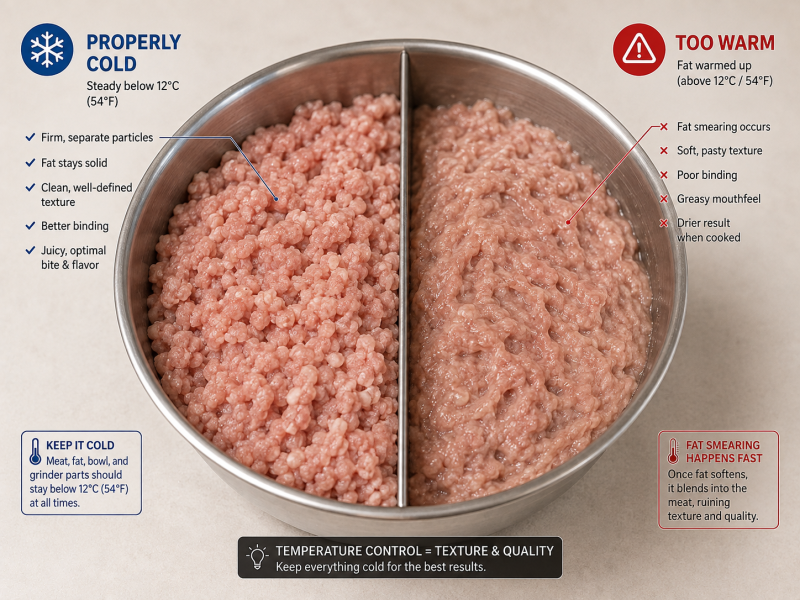
Add your adjustment and mix the sausage mixture thoroughly but efficiently, keeping it cold throughout the process.
Don't sprinkle additional seasoning over the top and assume it will somehow distribute itself during stuffing.
Then Fry Another Sample
If you've made a meaningful adjustment, test again.
There's little point correcting the mixture and then stuffing it without checking whether the change actually produced the result you wanted.
A second small sample costs almost nothing compared with discovering the mistake after the entire batch has been stuffed.
Keep the Rest of the Mixture Cold
While you're cooking and tasting your sample, the remaining sausage mixture shouldn't be sitting unnecessarily on a warm kitchen counter.
Keep it refrigerated or in its chilled bowl while performing the test.
Once you're satisfied with the flavour, you can move directly to stuffing.
The Fry Test Has Limitations
A fry test is extremely useful, but it doesn't reproduce every characteristic of the finished sausage.
A sausage cooked inside its casing retains moisture differently from a thin patty fried directly against a hot pan.
Smoking, poaching, grilling and resting can also change the final flavour and texture.
Some spices become more noticeable after cooking, while fresh garlic, herbs and other aromatics can develop further during an overnight rest.
So think of the fry test as a quality-control check, not an exact preview of the finished sausage.
What About Cured, Fermented or Speciality Sausages?
The fry test is particularly straightforward for ordinary fresh sausage mixtures intended to be cooked.
More specialised products can be different.
Cured, fermented, dried or heavily processed sausages undergo changes during production that a quick pan-fried sample cannot reproduce.
You can sometimes use a cooked sample to evaluate basic seasoning, but don't expect it to tell you exactly what the mature finished product will taste like.
For these products, always follow the specific recipe and its food-safety procedures.
Record Your Adjustments
This is one of the most useful habits when developing your own sausage recipes.
If you started with 4 g of pepper but decided after the fry test that 5 g was better, write it down.
If you added another 3 g of chilli, write that down too.
Otherwise you may produce the perfect sausage today and have no idea how to reproduce it next month.
Five Minutes Well Spent
By the time you've reached the stuffing stage, you may be eager to see the first sausage coming out of the stuffer.
It's tempting to skip the test and get on with it.
Don't.
A few minutes spent cooking and tasting a small sample can prevent you from stuffing an entire batch that isn't quite right.
Test it. Taste it. Adjust it if necessary. Then stuff it.
Reference: What to Check During a Fry Test
| Check | What You're Looking For | Possible Adjustment |
|---|---|---|
| Salt | Well seasoned without tasting excessively salty. | Add a carefully weighed amount if clearly under-seasoned. |
| Spices | Balanced flavour appropriate to the sausage style. | Adjust individual spices conservatively. |
| Heat | Chilli intensity at the level you intended. | Add chilli gradually and retest. |
| Herbs & Aromatics | Garlic, herbs and other aromatics are balanced. | Make small additions where necessary. |
| Bind | The cooked sample holds together rather than crumbling. | Check whether sufficient protein bind has been developed. |
| Overall Balance | No single flavour unintentionally overwhelms the sausage. | Adjust carefully, mix thoroughly and fry another sample. |
Dieter's Tip
If you change anything after your fry test, write down exactly what you added. Some of my best recipe adjustments have happened at this stage, but they're only useful next time if I remember what I changed. And if you've made a noticeable adjustment, fry another small sample before you start stuffing.