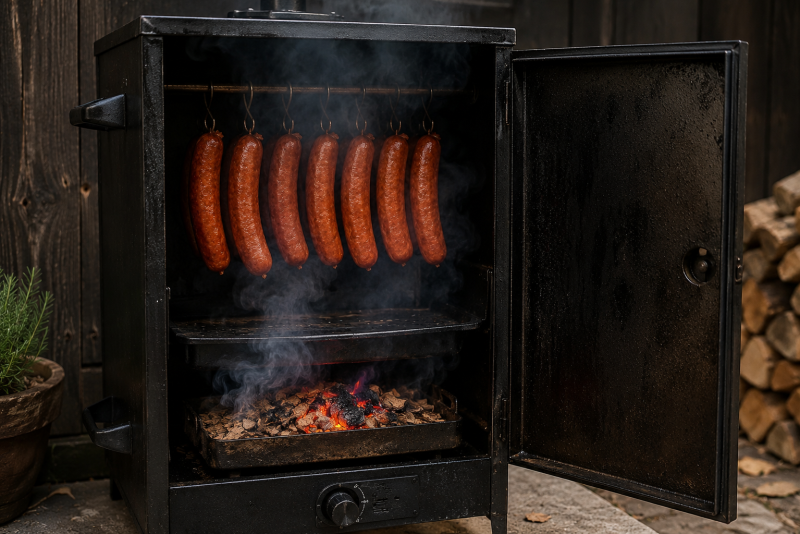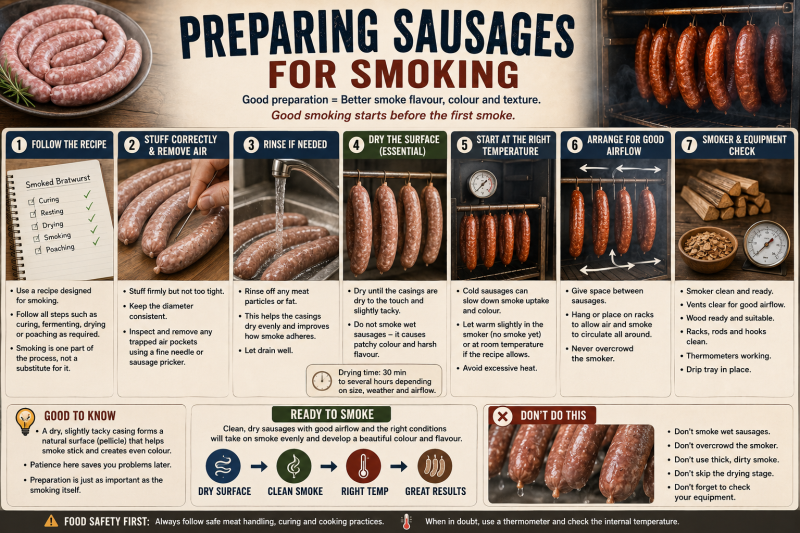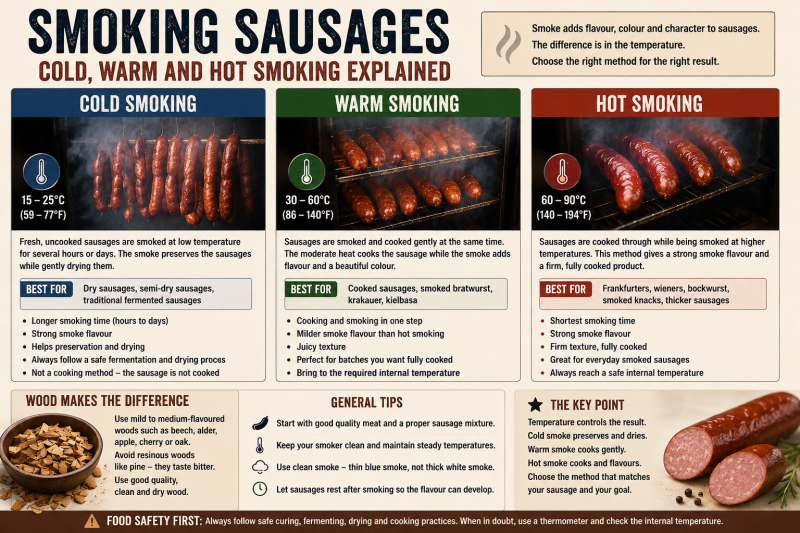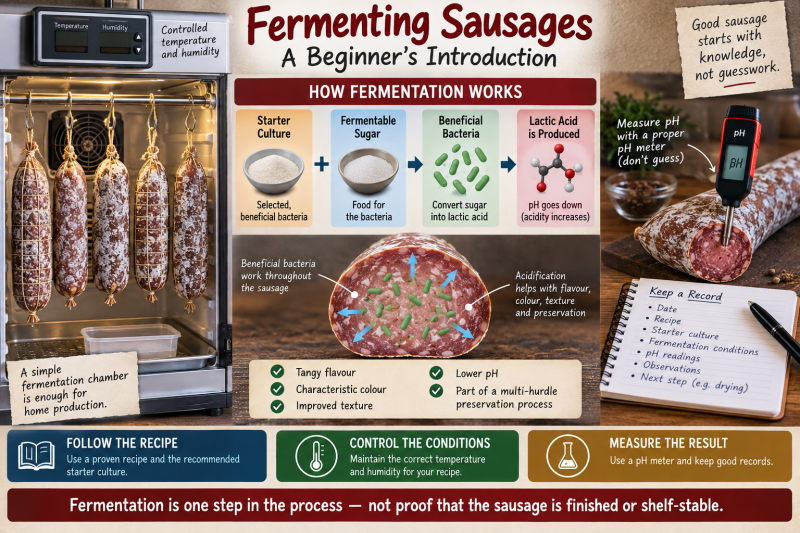
Once your sausages are prepared and the smoker is ready, there's one more decision to make before producing that first curl of smoke:
Which wood should you use?
Wood isn't simply fuel. When smoking sausages, it becomes another ingredient.
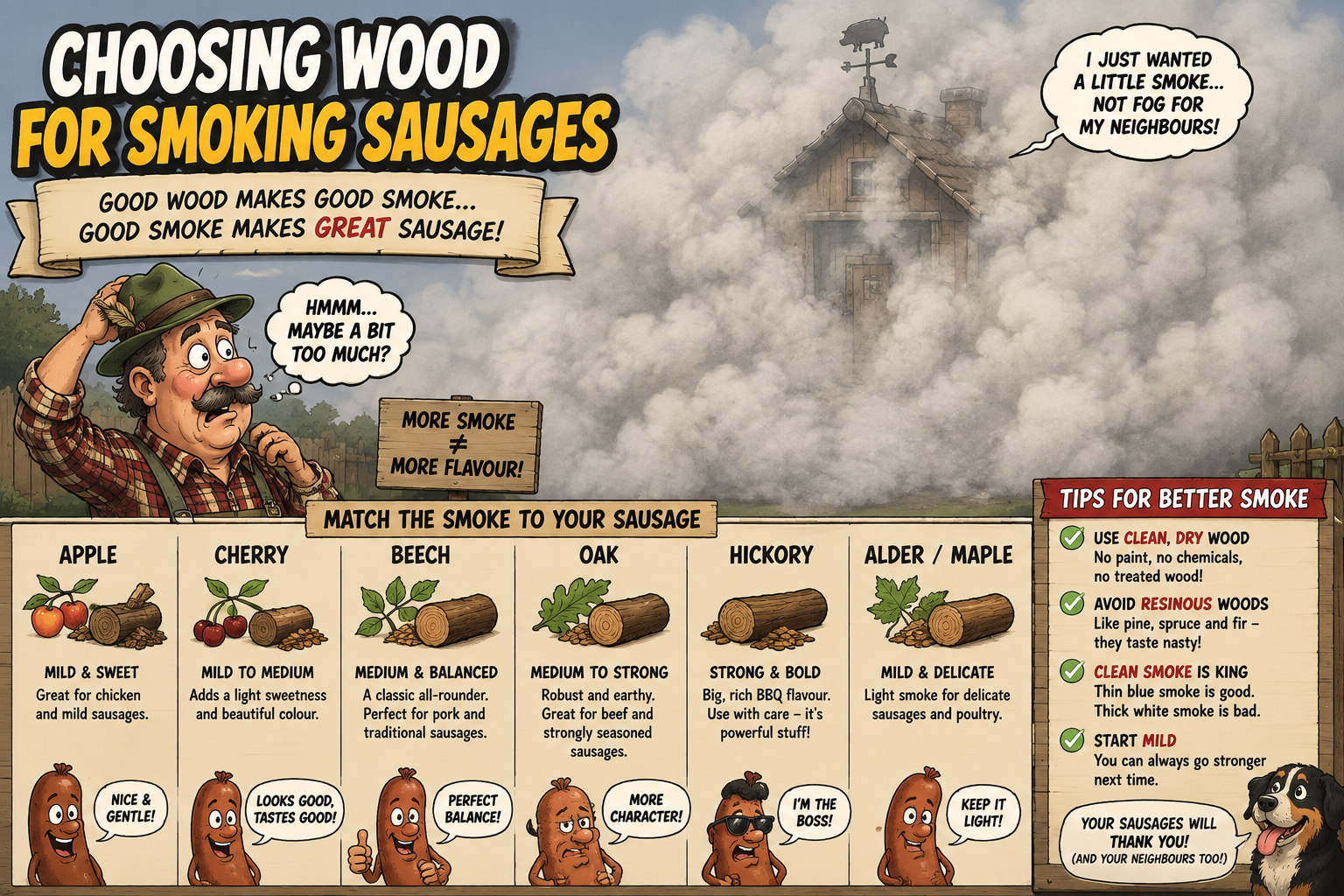
Different woods produce noticeably different aromas and flavours. Some are mild and slightly sweet, others earthy and robust, while particularly strong woods can quickly dominate a delicately seasoned sausage.
Choosing the right wood isn't about finding one variety that's universally "best". It's about matching the character of the smoke to the sausage you're making.
Think of Smoke as a Seasoning
I like to think about smoke in much the same way as salt, pepper or herbs.
You want enough to contribute something worthwhile, but not so much that it overwhelms everything else.
If you've carefully balanced garlic, marjoram, pepper, coriander or other spices in your sausage, you should still be able to taste them after smoking.
The best smoke complements the sausage rather than hiding it.
Beech – A Classic Choice for Sausages
Beech is one of my favourite starting points for sausage making and a classic smoking wood across Central Europe.
It produces a relatively clean, balanced smoke with enough character to be noticeable without becoming excessively heavy.
Beech works particularly well with pork and beef sausages and is an excellent choice for many German and Central European styles.
It also produces an attractive smoked colour when used correctly.
Smoke character: Medium, balanced and clean
Good with: Pork, beef, bratwurst and many Central European sausages
Apple – Mild, Sweet and Forgiving
Apple wood produces a milder smoke with a subtle fruity sweetness.
This makes it particularly useful when you don't want the smoke to dominate the seasoning.
I especially like mild fruit woods for chicken and other delicately flavoured sausages, although apple works very well with pork too.
It's also a good wood for someone beginning to experiment with smoking because its gentler character makes it relatively forgiving.
Smoke character: Mild, slightly sweet and fruity
Good with: Chicken, pork and mildly seasoned sausages
Cherry – Mild Smoke with Beautiful Colour
Cherry wood is another excellent fruit wood.
Its smoke is generally mild to medium with a subtle sweetness, but one of its particularly attractive characteristics is the rich colour it can help develop on smoked foods.
Cherry pairs nicely with pork and poultry and can also be blended with stronger woods when you want additional depth without making the smoke excessively heavy.
Smoke character: Mild to medium, slightly sweet
Good with: Pork, chicken and mildly to moderately seasoned sausages
Oak – Stronger and More Robust
Oak moves us towards a stronger smoke profile.
It has a fuller, more robust character than most fruit woods but doesn't normally have the distinctive intensity associated with woods such as hickory.
That makes oak a good match for beef, pork and sausages with stronger seasoning.
For a very delicate chicken sausage, however, I would probably choose something milder unless I specifically wanted the smoke to become a prominent part of the flavour.
Smoke character: Medium to strong, robust and earthy
Good with: Beef, pork and strongly seasoned sausages
Hickory – Powerful and Distinctive
Hickory is strongly associated with American barbecue and produces a much more assertive smoke flavour.
Used carefully, it can give pork and beef sausages a wonderfully rich BBQ character.
But hickory is also a good example of why more smoke isn't necessarily better.
Its strong flavour can overpower mild sausages relatively quickly, particularly during longer smoking sessions.
If you're uncertain, use it lightly or blend it with a milder wood.
Smoke character: Strong, rich and distinctly smoky
Good with: Pork, beef and robust BBQ-style sausages
Maple – Gentle and Slightly Sweet
Maple offers another relatively gentle option.
Its smoke tends to be mild with a subtle sweetness, making it suitable for pork, poultry and sausages where the seasoning should remain prominent.
It can be particularly useful when you want a noticeable smoked character without the intensity of oak or hickory.
Smoke character: Mild to medium and subtly sweet
Good with: Pork, chicken and delicately seasoned sausages
What About Alder?
Alder produces a light, delicate smoke and is probably best known for smoking fish.
That doesn't mean it can't be used for sausages.
Its gentle character can work with poultry or very lightly seasoned sausages when only a subtle smoke flavour is wanted.
Smoke character: Mild and delicate
Good with: Poultry and lightly seasoned sausages
Matching the Wood to the Sausage
| Wood | Smoke Strength | Character | Good Starting Point For |
|---|---|---|---|
| Beech | Medium | Clean, balanced | Pork, beef, German-style sausages |
| Apple | Mild | Sweet, fruity | Chicken, pork, mild sausages |
| Cherry | Mild–Medium | Slightly sweet, good colour | Pork, chicken |
| Maple | Mild–Medium | Gentle, slightly sweet | Pork, poultry |
| Alder | Mild | Light, delicate | Poultry, delicate sausages |
| Oak | Medium–Strong | Robust, earthy | Beef, pork, strongly seasoned sausages |
| Hickory | Strong | Rich, powerful BBQ smoke | Pork, beef, robust sausages |
You Can Mix Smoking Woods
You don't have to use only one type of wood.
Blending woods is an excellent way to create a smoke profile that sits somewhere between mild and strong.
For example, a stronger wood such as oak or hickory can be combined with apple or cherry to soften its intensity and introduce a little fruitiness.
Beech can also provide an excellent neutral foundation for experimenting with smaller amounts of other woods.
There's no need to make blending complicated. Start with a combination that sounds sensible, keep notes and adjust it the next time you make the sausage.
Wood Species Isn't the Only Thing That Matters
Choosing beech instead of apple doesn't automatically guarantee good smoke.
The condition of the wood and the way it burns are just as important.
Smoking wood should be clean, suitable for food smoking and free from paint, varnish, glue, preservatives and other chemical treatments.
Never assume that an unidentified piece of timber is suitable simply because it's wood.
Avoid Treated and Contaminated Wood
Never use painted, stained, pressure-treated or chemically treated timber for smoking food.
Construction scraps, old furniture, pallets and similar materials shouldn't simply be thrown into a smoker.
They may contain adhesives, coatings, preservatives or contaminants that you definitely don't want anywhere near your food.
Use wood that you know is suitable for food smoking.
Avoid Resinous Softwoods
Highly resinous softwoods such as pine, spruce and fir are generally unsuitable for smoking sausages.
Their resin and smoke can produce unpleasant, harsh flavours and undesirable deposits.
For sausage making, established food-smoking hardwoods and fruit woods are the safer and much more predictable choice.
Chunks, Chips, Dust or Pellets?
The physical form of the wood depends largely on your smoker.
Wood chunks work well in many charcoal smokers because they burn slowly and can provide smoke over an extended period.
Wood chips are smaller and produce smoke relatively quickly, making them useful in equipment designed for them.
Smoking dust or fine sawdust is commonly used with certain cold-smoking generators.
Pellets are designed for pellet smokers and some dedicated smoke generators.
One isn't automatically better than another. Use the form appropriate for your smoking equipment.
Should You Soak Wood Chips?
Soaking wood chips is traditional advice you'll still encounter frequently, but it isn't automatically necessary.
Wet wood first has to lose much of that moisture before it can smoulder effectively, and the visible vapour produced at the beginning isn't the same thing as desirable smoke.
If your smoker manufacturer specifically recommends soaking chips, follow the equipment instructions. Otherwise, properly controlled dry smoking wood is generally the more predictable starting point.
Clean Smoke Matters More Than Lots of Smoke
The species of wood receives a lot of attention, but smoke quality is even more important.
A smoker shouldn't look like it's trying to hide the entire garden behind a thick white cloud.
Heavy, dirty smoke can deposit harsh and bitter compounds on the casing.
What we're looking for is a clean, controlled supply of smoke with adequate airflow.
More visible smoke doesn't automatically mean more delicious sausage.
Don't Judge Smoke Only by Colour
Different smokers produce smoke differently, and you don't need to become obsessed with achieving one particular visible shade of smoke.
Instead, concentrate on a clean-burning fire or properly operating smoke generator, sufficient airflow and a pleasant smoke aroma rather than an acrid one.
If the smoke smells harsh enough to make you want to move away from it, that's probably not the flavour you want concentrated on your sausages either.
Start Mild and Build From There
If you're new to smoking sausages, I recommend starting with a relatively mild or balanced wood.
Beech or apple are excellent choices.
After you've tasted the finished sausage, you can decide whether you'd like more smoke intensity next time.
It's much easier to increase smoke character in your next batch than to remove an overpowering smoky flavour from sausages you've already made.
Keep Notes
This is one of those areas where a simple notebook becomes surprisingly useful.
Write down:
- the sausage you made;
- the wood or wood mixture you used;
- approximately how much smoke you applied;
- the smoking time and temperature;
- and what you thought of the finished flavour.
After a few batches, you'll begin developing your own favourite combinations.
There Is No Single Perfect Smoking Wood
Ask ten people which wood makes the best smoked sausage and you may receive ten different answers.
That's part of the fun.
Beech might be perfect for a German-style pork sausage, apple may suit a delicate chicken sausage beautifully, while hickory can give a robust BBQ sausage exactly the character you're looking for.
The important thing is understanding what each wood contributes and then matching that character to the sausage.
Choose your wood the same way you choose your spices: with the finished flavour in mind.
Dieter's Tip
If you're unsure which wood to use, start with beech or a mild fruit wood such as apple. Don't try to make the smoker produce as much smoke as possible. A light, steady supply of clean smoke gives you far more control over the final flavour. You can always use a stronger wood or smoke a little longer on your next batch.